BMW Urban Driver Assist to Challenge Tesla FSD in 2027
BMW urban driver assist launches in 2027 to rival Tesla FSD, introducing Level 2 city navigation while navigating strict European safety standards.
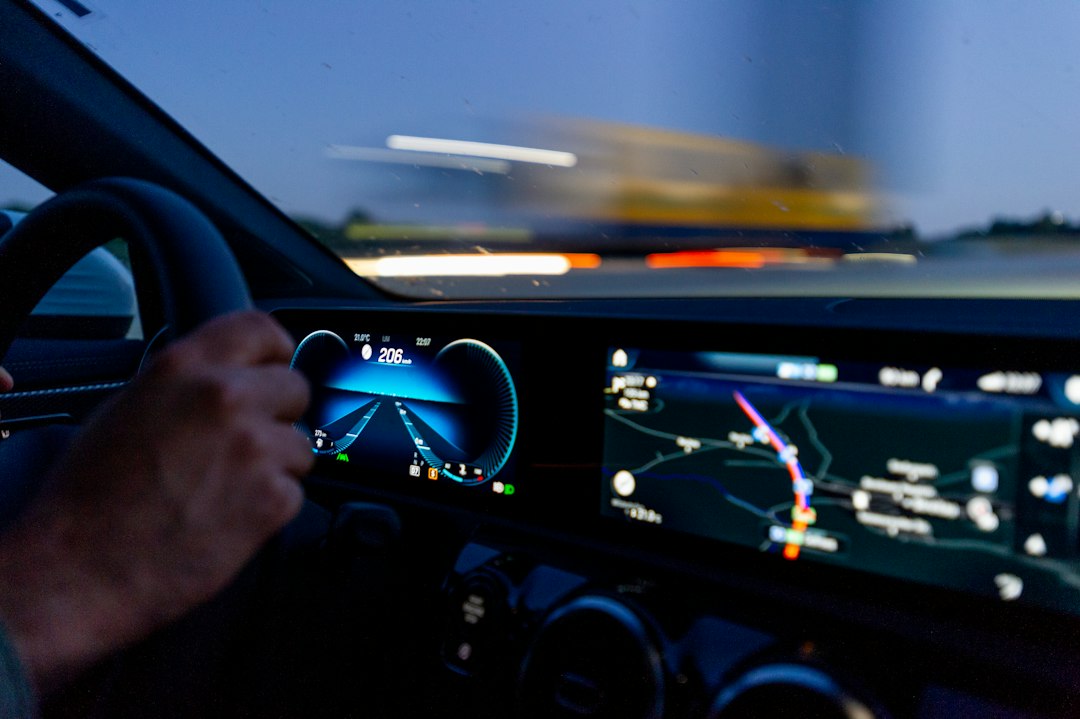
BMW has announced plans to deploy navigation-guided city driving features across select vehicle lines beginning in 2027, marking a direct attempt to challenge Tesla's market leadership in advanced driver assistance systems. Operating under the Society of Automotive Engineers (SAE) Level 2 designation, the system will debut in Germany before rolling out to additional international regions, using onboard GPS and sensor suites to manage complex urban driving maneuvers under human supervision.
The deployment strategy relies on continuous over-the-air (OTA) software updates delivered to existing and future vehicle lines. By targeting city streets rather than restricting system activation to divided highways, the German automaker is stepping into the most technically demanding segment of consumer vehicle automation.
Architectural Foundation and Sensor Integration
The technological engine behind this expansion rests on BMW's next-generation vehicle infrastructure, known as the Neue Klasse architecture. Developed in partnership with semiconductor designer Qualcomm, the platform combines high-compute system-on-chip hardware with a centralized software framework capable of processing complex spatial data in real time.
Rather than requiring customers to purchase entirely new hardware suites in 2027, the manufacturer is pre-equipping several current production vehicles with the necessary optical cameras, radar units, and ultrasonic sensors. Affected product lines include:
- Executive sedans such as the 3 Series and 7 Series
- Premium crossover platforms including the X5
- Electric mobility architectures such as the iX3 and iX4
By embedding the physical hardware directly into standard production runs, the manufacturer creates a ready-made installation base. When regulatory approvals clear and software validation reaches maturity, the company can activate urban navigation features across thousands of consumer vehicles through a remote code push.
Technical Mechanics: Level 2 Supervision in City Traffic
Navigating dense downtown environments introduces unpredictable variables that do not exist on open highways, including pedestrians, cyclist lanes, complex multi-lane turns, and traffic circles. To address these dynamics, the software automates lateral control (steering) and longitudinal control (acceleration and braking) based on an active navigation route.
Hands-On Protocols and System Cooperative Control
Despite its capability to execute turns, yield to surrounding traffic, and change lanes autonomously, the software operates strictly as an SAE Level 2 system. Under industry standardization, Level 2 requires the human driver to maintain constant oversight and accept immediate legal responsibility for the vehicle's movement.
Unlike highway operational modes—where hands-free driving is permitted under specific conditions—urban operation requires the driver to keep their hands physically on the steering wheel at all times. The system utilizes a cooperative control interface, meaning manual steering or pedal inputs by the driver blend smoothly with system guidance rather than abruptly disabling the automation entirely. Real-time system perception is projected directly into the operator's line of sight through a high-resolution heads-up display alongside a detailed three-dimensional environment render on the central dashboard console.
European Regulatory Approval and Standards Compliance
The decision to launch first in Germany highlights a deliberate regulatory strategy. European automotive authorities operate under stringent type-approval frameworks governed by the United Nations Economic Commission for Europe (UNECE). Historically, these frameworks have imposed tighter constraints on automated vehicle maneuvers than the self-certification model utilized in the United States.
Recent updates to European safety standardizations have opened a regulatory pathway for systems that propose and execute automated steering actions within urban corridors. Third-party technical agencies have already conducted preliminary road testing on pre-production builds to verify compliance with functional safety mandates. Full regulatory certification is targeted for early 2027, setting a legal benchmark that other global jurisdictions may mirror.
The Safety Paradox of Partial Automation
As legacy car manufacturers and EV pioneers expand partial automation into urban environments, safety researchers express growing concern over human factor vulnerabilities. The primary technical risk associated with Level 2 urban automation is not necessarily software performance, but driver psychology.
Vigilance Decrement and Reaction Delay
When software handles routine driving tasks, human operators frequently experience "vigilance decrement"—a cognitive phenomenon where sustained attention rapidly declines when monitoring automated tasks. Studies consistently demonstrate that drivers using partial automation suffer from delayed reaction times when forced to intervene during sudden hazards.
Level 0: No Automation  --> Human performs all driving tasks
Level 1: Driver Assist   --> System handles steering OR speed
Level 2: Partial Auto    --> System handles steering AND speed (Human monitors constantly)
Level 3: Conditional    --> System handles driving; Human intervenes upon request
Because Level 2 architectures place full legal liability on the individual behind the wheel, manufacturers face mounting scrutiny regarding how effectively their systems combat driver over-reliance. While Tesla has encountered extensive legal battles over consumer misunderstandings of its automated marketing terms, BMW's explicit emphasis on continuous hands-on control reflects a risk-averse strategy designed to mitigate liability disputes and regulatory pushback.
Industry Impact: What to Watch Next
The transition of city-level driving automation from experimental software to production-grade European vehicles marks a decisive shift in automotive software monetization. Over the next 24 to 36 months, several critical factors will determine whether this strategic push succeeds:
- Regulatory Timelines: Watch for official UNECE and German Federal Motor Transport Authority (KBA) final certification rulings in early 2027.
- Hardware Parity: Monitor whether Qualcomm-powered compute stacks deliver sufficient processing power without requiring supplemental LiDAR hardware.
- Competitive Pricing Models: Track whether BMW offers urban assistance as a one-time software purchase, an upfront vehicle package, or a recurring monthly software subscription.
- Driver Monitoring Rigor: Observe how the automaker enforces driver attention, particularly whether infrared eye-tracking cameras will be mandated alongside capacitive steering wheel sensors.
Reporting reference: this briefing is TechWire’s independent analysis. Primary reporting was published by The Verge — read the source article.
Related analysis

Subaru Europe EV Transition Strategy: Ending Gas Cars by 2027
Subaru Europe EV transition forces an exit from gas cars by 2027. Discover how strict EU emission rules and software shifts drive niche automaker strategy.

x86 Processor Evolution: How Legacy Trade-Offs Won
Explore the x86 processor evolution, from 1970s hardware choices to modern computing compatibility, explaining little-endianness and register design.

NSF Leadership Nomination Collapses Amid Science Policy Crisis
Senate pushback on the NSF leadership nomination highlights growing friction over federal science funding and academic research oversight.