x86 Processor Evolution: How Legacy Trade-Offs Won
Explore the x86 processor evolution, from 1970s hardware choices to modern computing compatibility, explaining little-endianness and register design.
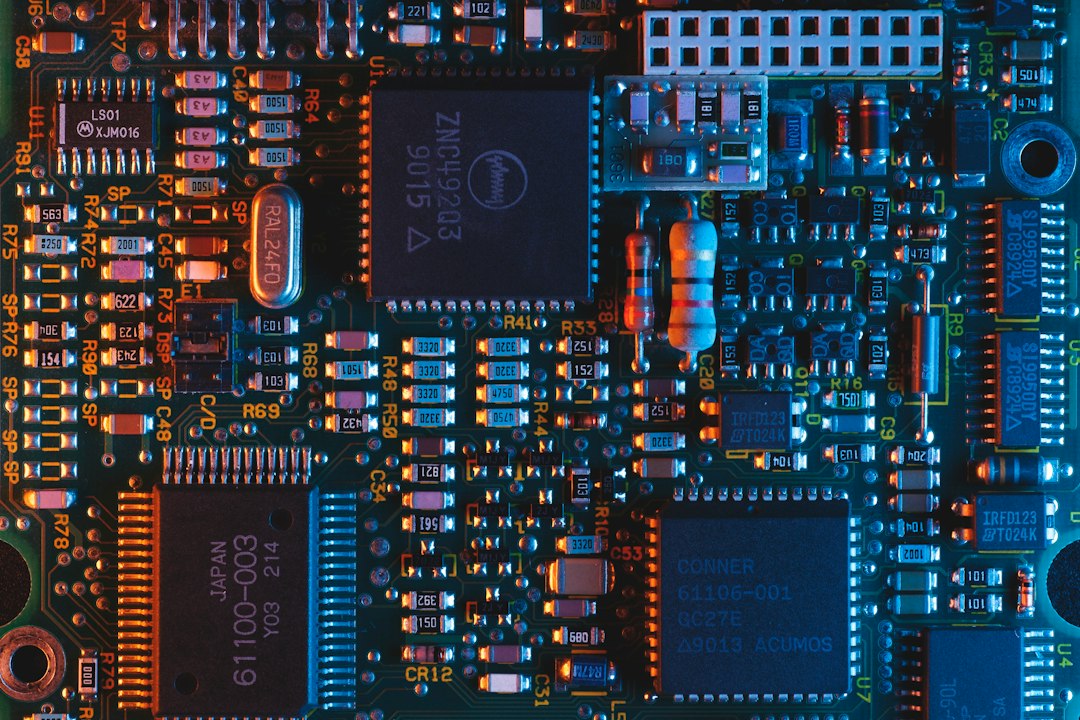
The trajectory of x86 processor evolution demonstrates how modern computing foundations were defined by commercial deadlines, budget constraints, and client requirements rather than a grand architectural master plan. Crucial structural characteristics—ranging from little-endian memory ordering to dedicated port-based input/output facilities—originated as tactical responses to hardware limits in the 1970s. Because subsequent product generations prioritized backward compatibility to protect existing software ecosystems, these early engineering choices remained permanently embedded in global silicon design.
Understanding why central processing units operate as they do requires looking beyond official technical datasheets. The oddities of the x86 assembly language reflect real-world engineering pressures where market speed routinely took precedence over ideal instruction set symmetry.
From Custom Calculator Logic to Flexible Processing
Before general-purpose microprocessors dominated personal computing, digital control logic depended heavily on fixed-function integrated circuits. The path toward programmable silicon accelerated when Japanese calculator manufacturer Busicom contracted Intel in 1969 to produce a suite of custom chips. Rather than fabricating multiple single-purpose components for different calculator functions, Intel proposed a flexible alternative: a single low-cost processing unit that executed instruction logic stored in read-only memory.
This initiative yielded the Intel 4004 in late 1971. Although primitive by modern standards, running at sub-megahertz frequencies with a 4-bit bus, its commercial significance stemmed from a critical contractual renegotiation. When financial distress forced the client to seek cost reductions, Intel repurchased the exclusive rights to the design. This strategic move transformed the programmable processor from an internal component buried inside commercial calculators into a standalone commodity available to the broader electronics industry.
Legacy Terminal Constraints: Little-Endian Storage and Parity
Many core attributes of x86 hardware trace back to a separate product line commissioned by Computer Terminal Corporation for their Datapoint 2200 intelligent terminal. The customer engineered the initial processing logic using discrete transistor-transistor logic chips and requested a single-chip integrated implementation. Although the client ultimately abandoned the integrated circuit project in favor of their original multi-chip board, Intel finalized the design as the 8008 in 1972.
The Datapoint heritage introduced two fundamental design characteristics that persist in desktop processors today:
- Little-Endian Memory Formatting: The original terminal processed numerical data using a bit-serial mechanism, evaluating numbers from the lowest-order bit onward to manage arithmetic carry operations. To align memory access with this stream, multi-byte integers were arranged with the least significant byte at the lowest memory address. This inverted storage layout was carried over into future CPU designs to retain software compatibility.
- Parity Status Checking: Serial terminal communication over noisy phone lines required constant data integrity checks. To handle this efficiently in hardware, engineers included a hardware parity flag that indicated whether an operation produced an even number of set bits. Decades after serial terminals became obsolete, this specialized status flag remains anchored within modern flag registers.
Register Schemes and Port-Based Input/Output Isolation
When Intel introduced the 8080 in 1974, it aimed to refine the primitive architecture of the 8008 while retaining its general register layout and programming style. Designed under the leadership of microchip pioneers Federico Faggin and Masatoshi Shima, the 8080 established structural conventions that software developers still encounter today. It introduced register pairing, enabling 8-bit registers to work in tandem as 16-bit memory address pointers.
Crucially, the 8080 separated standard system memory from peripheral hardware communication by creating an isolated input/output space accessed through explicit hardware instructions. This decision prevented system memory addresses from being consumed by peripheral controllers. Modern graphics hardware and basic input/output system controls still interact with specific port addresses directly because of this architectural separation.
+-----------------------------------------------------------------+
|                   EVOLUTION OF EARLY X86 SILICON                 |
+-----------------------------------------------------------------+
|  Intel 4004 (1971)  -> First commercial microprocessor          |
|  Intel 8008 (1972)  -> Bit-serial roots, parity flag, endianness|
|  Intel 8080 (1974)  -> Isolated I/O space, register pairs       |
|  Intel 8085 (1976)  -> Bus multiplexing, simplified power      |
|  Intel 8086 (1978)  -> 16-bit architecture, segmented memory    |
+-----------------------------------------------------------------+
When competitive pressure mounted from Zilog's Z80—a faster, cheaper alternative capable of running 8080 software—Intel responded with the 8085 in 1976. To fit inside standard 40-pin chip packages, the 8085 multiplexed its address and data buses, sending memory location data and raw instruction data over shared physical pins at different clock cycles. This space-saving technique directly influenced subsequent 16-bit developments.
How the 8086 Became a Permanent Stopgap
During the late 1970s, Intel's primary long-term investment was a complex, high-level object-oriented processor known as the iAPX 432. However, severe development delays and aggressive competition forced the company to launch an emergency interim project in 1976: the 16-bit 8086 microprocessor.
Designed rapidly under the leadership of Stephen Morse, the 8086 was engineered to provide a straightforward migration path for existing 8080 code bases. While it could not execute 8080 binary machine code directly, Intel provided automated conversion software to translate 8080 assembly instructions directly into 8086 equivalents on a line-by-line basis. This mechanical translation requirement dictated the configuration of the 8086 registers, binding new 16-bit hardware structures to older 8-bit logic formats.
To address more than 64 kilobytes of system memory while preserving 16-bit register sizes, engineers introduced segmented memory addressing. By combining a base segment register value with an offset register value, the CPU achieved a one-megabyte memory reach. What was conceived as a temporary solution to bridge a two-year market gap ultimately became the dominant standard for personal computing.
Modern Silicon Evolution: Shedding Legacy Architectural Debt
As contemporary processors face demanding workloads in artificial intelligence, server virtualization, and advanced graphics, the burden of supporting decades of backward compatibility has drawn renewed scrutiny. Modern x86 processors still power up by simulating the operating modes of legacy 16-bit hardware before transitioning into 64-bit long mode—a process that adds microarchitectural complexity and security surfaces to modern chip designs.
Engineers and system architects should closely watch several key developments as chipmakers attempt to streamline future silicon:
- Architectural Simplification Proposals: Major hardware vendors have introduced concepts such as x86-S, which aim to remove native support for legacy 16-bit and 32-bit execution modes, enabling processors to boot directly in 64-bit mode.
- Reduced Instruction Set Competition: RISC-based architectures, such as ARM and RISC-V, continue to gain ground in high-performance computing by avoiding the backward compatibility overhead inherent to x86 processor evolution.
- Microcode Abstraction layer Optimization: Modern x86 chips rely heavily on complex hardware decoders that translate variable-length legacy instructions into fixed-length RISC-like internal operations. Simplifying this translation pipeline remains a critical focus for improving energy efficiency.
The commercial survival of x86 has always depended on maintaining compatibility with software written for earlier generations. However, as cloud infrastructure and mobile hardware push for maximum power efficiency, the balance between preserving historical code compatibility and maximizing hardware execution speed is entering a pivotal phase.
Reporting reference: this briefing is TechWire’s independent analysis. Primary reporting was published by pikuma.com — read the source article.
Related analysis

NSF Leadership Nomination Collapses Amid Science Policy Crisis
Senate pushback on the NSF leadership nomination highlights growing friction over federal science funding and academic research oversight.

TRMNL Frame: Full Color ePaper Display Canvas Debuts
An analysis of TRMNL Frame, a 31.5-inch full color ePaper display using Spectra 6 tech, custom color engines, and in-house manufacturing.

Why Data Center Nuclear Energy Deals Will Survive Politics
Analysis of why tech AI infrastructure and data center nuclear energy partnerships remain resilient despite political friction and market volatility.