Vulcan Rocket Failure Deepens US Space Launch Monopoly
The recent Vulcan rocket failure grounds ULA launches, disrupting Amazon Leo deployment and tightening SpaceX's grip on commercial and defense payloads.
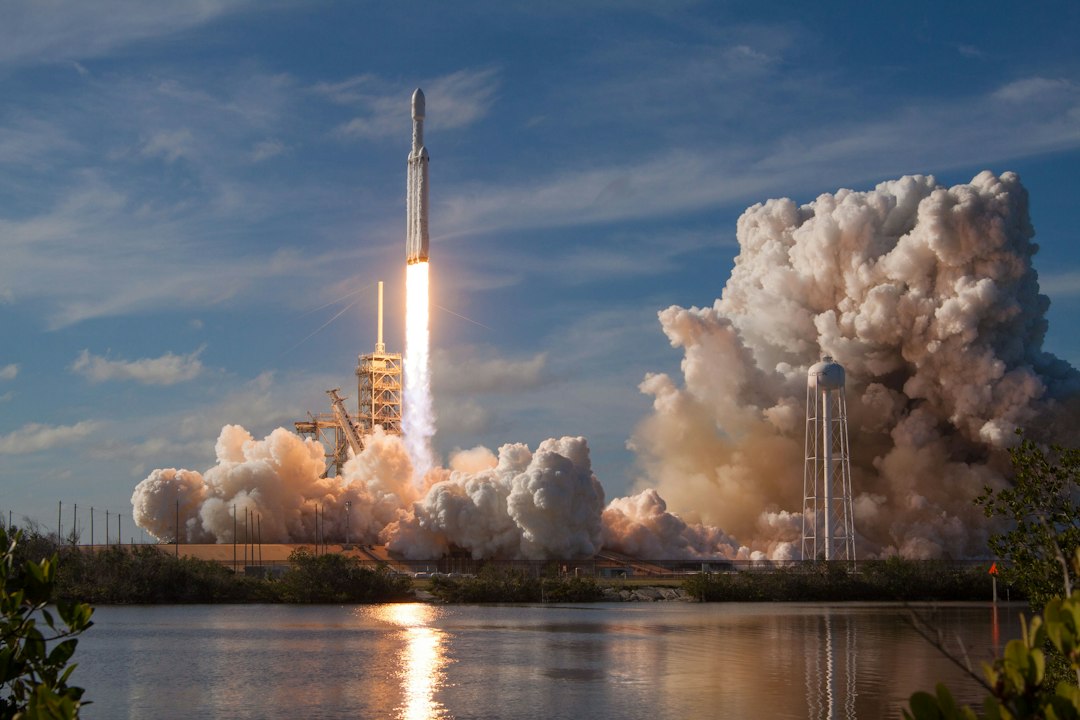
United Launch Alliance’s inaugural total flight loss of its heavy-lift Vulcan launcher marks a critical disruption for the aerospace sector. The failure to place 40 Amazon Leo broadband satellites into low Earth orbit not only halts near-term constellation expansion for SpaceX’s primary satellite internet rival but also concentrates immense operational pressure onto a single commercial provider for critical U.S. defense payloads.
While previous Vulcan missions encountered minor solid rocket booster anomalies that the guidance systems successfully corrected mid-flight, this complete mission failure forces an indefinite grounding of the vehicle. The resulting bottleneck leaves both commercial network operators and defense planners with severely constrained alternatives during a pivotal period of orbital infrastructure deployment.
Analyzing the Flight Anomaly: Core Booster and Engine Dynamics
The launch sequence proceeded normally through the jettison of the six strap-on solid rocket boosters, but flight telemetry indicated severe performance deviations during the main stage burn. The two liquid-methane and liquid-oxygen BE-4 engines powering the core booster stage continued firing for roughly 30 seconds past their scheduled cutoff time. In liquid propulsion systems, an extended main-engine burn typically indicates that control software detected insufficient thrust output or improper mass flow rates, keeping the engines active to compensate for low performance.
Following main engine shutdown, vehicle telemetry recorded an unexpected roll rate before stage separation. Although the Centaur V upper stage ignited its twin RL10 engines and attempted active vectoring to correct the trajectory, the initial orientation and altitude deficits prevented the spacecraft from attaining a stable orbit. The entire stack subsequently re-entered the atmosphere, destroying the payload.
This outcome presents significant technical challenges for propulsion engineers. Because the primary anomaly originated within the core booster stage, investigators must determine whether the root cause stems from:
- Internal turbopump, valve, or combustion chamber mechanics inside the BE-4 engines.
- Propellant delivery systems, pressurization lines, or structural feed lines within the booster hull.
- Guidance system software errors that misinterpreted stage acceleration or vehicle attitude.
Amazon Leo Constellation Impact and the Deployment Bottleneck
For Amazon, the loss of 40 satellite units is less financially damaging than the operational pause enforced on its primary launch vehicle. Amazon’s planned Leo constellation calls for 3,292 satellites in low Earth orbit to deliver global broadband services, directly competing with SpaceX’s Starlink network. Currently, Amazon has under 400 operational satellites deployed, even though manufacturing facilities have already produced more than 1,000 units that remain in storage.
With 38 total Vulcan launches contracted to erect the core network, an extended grounding of United Launch Alliance (ULA) disrupts Amazon’s deployment timeline. Commercial satellite networks rely on continuous launch cadences to establish sufficient orbital density for seamless global coverage. Delayed deployments risk missing regulatory build-out deadlines mandated by spectrum licensing authorities.
Amazon’s launch strategy was structured to mitigate single-provider risk by distributing contracts across ULA, European provider Arianespace, and Blue Origin. However, alternative launch capacity remains constrained:
- Arianespace (Ariane 6): Rocket availability is tightly booked, with limited immediate manifest slots to accelerate Amazon’s launch frequency.
- Blue Origin (New Glenn): The heavy-lift vehicle has experienced its own development setbacks, including a ground test explosion traced to an engine valve failure, keeping its launch facilities offline.
- SpaceX (Falcon 9): While Amazon previously purchased a limited block of Falcon 9 flights to maintain momentum, relying heavily on its primary broadband market rival is structurally unviable over the long term.
Defense Procurement and the Strategic Single-Source Risk
The broader vulnerability created by the failure falls on the U.S. Space Force and the Department of Defense. ULA was originally created to provide dual-source launch assurance, guaranteeing that the U.S. military would never depend entirely on one launch provider for national security space assets. Under current National Security Space Launch contracts, ULA holds approximately half of all scheduled military payload manifests.
An indefinite grounding of Vulcan forces military logistics officers to re-evaluate near-term launches. Sensitive intelligence, surveillance, and secure communication satellites cannot remain grounded indefinitely without degrading orbital defense capabilities. Consequently, the Pentagon will likely be forced to transfer time-sensitive missions away from ULA and reassign them to SpaceX.
This shift creates an operational paradox for defense leaders. While SpaceX’s Falcon 9 and Falcon Heavy vehicles offer proven reliability, SpaceX is actively shifting its industrial infrastructure toward its next-generation Starship platform. Starship has not yet completed the rigorous multi-year certification process required for critical national security payloads. If military payloads are forced onto SpaceX existing architecture, it creates high congestion on Falcon production lines while cementing an unintended single-provider monopoly for national defense access to space.
Shared Engine Architecture Creates Systemic Industry Risk
A critical secondary effect of the flight failure lies in the cross-provider dependency on the BE-4 liquid propulsion system. Designed and manufactured by Blue Origin, the BE-4 engine serves as the main first-stage propulsion plant for both ULA’s Vulcan and Blue Origin’s own New Glenn rocket.
If the failure investigation pinpoints a design defect, material flaw, or manufacturing quality issue within the BE-4 engine assembly, the corrective actions will apply to both launch vehicles. This shared component architecture effectively ties the operational readiness of ULA to the return-to-flight timeline of Blue Origin’s heavy-lift program. Rather than operating as two independent competitors, both companies face hardware-level coupling that amplifies system-wide supply chain vulnerability.
What to Watch in the Aerospace Market
Over the coming months, industry analysts and procurement officials should monitor several key milestones to gauge the recovery of the non-SpaceX launch sector:
- Root-Cause Investigation Timeline: Formal findings from ULA’s joint investigation board will establish whether the fault requires simple software adjustments or time-consuming hardware redesigns of the BE-4 propulsion system.
- Space Force Manifest Reallocations: Official announcements regarding the transfer of military launch slots from ULA to SpaceX Falcon Heavy hardware will signal the expected duration of Vulcan's grounding.
- Amazon’s Regulatory Filings: Requests to spectrum regulators for timeline adjustments will indicate how severely constellation deployment schedules have been impacted.
- Blue Origin Hot-Fire Testing: The resumption of static engine firings for the New Glenn launcher will serve as a leading indicator of BE-4 structural modifications.
Reporting reference: this briefing is TechWire’s independent analysis. Primary reporting was published by Ars Technica — read the source article.
Related analysis

x86 Processor Evolution: How Legacy Trade-Offs Won
Explore the x86 processor evolution, from 1970s hardware choices to modern computing compatibility, explaining little-endianness and register design.

NSF Leadership Nomination Collapses Amid Science Policy Crisis
Senate pushback on the NSF leadership nomination highlights growing friction over federal science funding and academic research oversight.

TRMNL Frame: Full Color ePaper Display Canvas Debuts
An analysis of TRMNL Frame, a 31.5-inch full color ePaper display using Spectra 6 tech, custom color engines, and in-house manufacturing.