sync withings smart scale data free
Sync Withings Smart Scale Data Free with Open-Source Tool
Learn how open-source project YourOwnWeigh lets users sync Withings smart scale data free while bypassing newly imposed subscription paywalls.
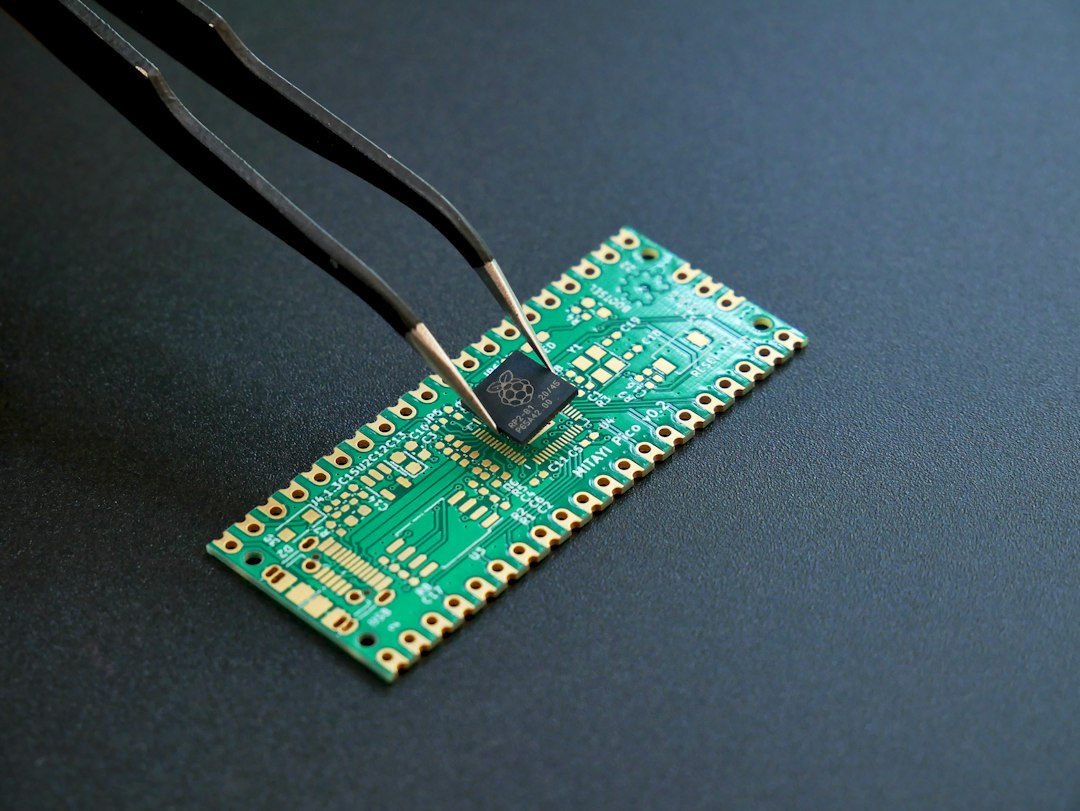
Connected health pioneer Withings recently restricted third-party platform integration behind its monthly subscription tier, prompting independent developers to construct local workarounds. A new community project called YourOwnWeigh demonstrates how custom firmware modifications allow owners to sync Withings smart scale data free from recurring service fees. This development highlights a growing friction between hardware manufacturers seeking high-margin recurring software revenues and consumers seeking sovereignty over their personal biometric data.
Monetizing Telemetry: The Rise of IoT Subscriptions
For years, smart home health devices operated under a straightforward commercial model: consumers paid a premium upfront for connected hardware, and manufacturers provided basic cloud infrastructure to log metrics and sync them with mobile ecosystems. However, as hardware saturation increases and hardware margins compress, consumer technology firms are aggressively converting core feature sets into subscription services.
By placing basic third-party software integration—such as exporting daily weight and body composition telemetry to external health hubs—behind a recurring subscription, companies attempt to turn one-time buyers into long-term software subscribers. This strategy faces significant consumer pushback when functionality that was previously free, or considered baseline for connected devices, is suddenly gated.
When hardware capabilities depend on corporate servers, manufacturers retain structural leverage over the device's feature matrix. This dynamic has sparked a resurgence in reverse-engineering efforts aimed at severing hardware dependencies on external vendor clouds.
Technical Architecture: How Custom Routing Bypasses Cloud Dependencies
To reclaim local access to hardware metrics, independent software developers must intercept and redirect data before it touches corporate servers. The open-source YourOwnWeigh initiative achieves this by fundamentally altering the destination network endpoint built into the hardware's operating environment.
Bluetooth Interception and Dynamic Patching
Rather than distributing altered code directly—which could raise copyright concerns—the tool downloads official firmware packages, applies binary patches locally, and transmits the modified code to the smart scale via Bluetooth LE. This modification replaces the default server addresses with a user-controlled endpoint.
Low-Cost Relay Infrastructure
To handle incoming biometric payloads without requiring expensive local server hardware, the project leverages lightweight cloud infrastructure. Key operational highlights include:
- Serverless Deployment: The backend receiver can execute within free-tier serverless environments like Cloudflare Workers, keeping operating costs effectively at zero.
- Profile and State Preservation: The initialization routine pulls existing user profiles and device parameters directly from the hardware during setup.
- Automated Client Ingestion: On iOS devices, native automation utilities like Apple Shortcuts pull the scale logs from the custom server endpoint and push them into local storage frameworks like Apple Health.
Through this multi-stage relay, measurements flow from the scale directly to custom cloud storage and back down to the user's mobile OS without ever traversing vendor servers.
The Growing Battle for Personal Health Data Sovereignty
This community-led workaround highlights a broader debate surrounding internet-of-things (IoT) ownership rights. When a consumer buys a physical scale, the underlying sensors belong to them, yet the data generated by those sensors is often treated as proprietary property by the server platform receiving it.
The rise of local-first smart home architectures—popularized by platforms like Home Assistant and local protocols such as Matter and Zigbee—demonstrates an increasing preference for devices that function without vendor cloud dependencies. Health devices represent an especially sensitive category; consumers are uniquely resistant to paying monthly maintenance fees simply to read their own physiological measurements.
However, altering consumer hardware firmware carries inherent risks. Modifying low-level system code can void warranties, break safety certifications, or lead to soft-bricking if an installation interrupted mid-transmission encounters corruption. Furthermore, because hardware vendors frequently update underlying microcontrollers across product revisions, custom firmware projects often suffer from limited hardware compatibility.
Strategic Implications for Connected Health Hardware
The emergence of tools designed to sync Withings smart scale data free highlights a fundamental misalignment in the smart device market. Vendors that attempt to monetize access to basic user-generated telemetry risk alienating technically adept power users who often influence broader market adoption.
| Traditional Cloud Model | User-Controlled Local Model |
|---|---|
| Data locked to platform APIs | Data routed to self-hosted endpoints |
| Feature availability tied to subscriptions | Features defined by firmware capabilities |
| Vulnerable to server deprecation | Operates independently of corporate servers |
| Vendor monetizes biometric pipeline | User maintains complete data sovereignty |
If hardware manufacturers continue enforcing software paywalls on standard telemetry, open-source alternatives will likely expand from niche technical forums into mainstream home automation suites. Hardware brands may ultimately be forced to choose between offering open, unencumbered APIs or engaging in an endless cat-and-mouse game against community-developed custom software.
What to Watch in Connected Health Ecosystems
Moving forward, several key factors will dictate whether open-source hardware modifications become standard practice for connected health gadgets:
- Firmware Countermeasures: Hardware manufacturers may introduce cryptographically signed bootloaders or anti-rollback mechanisms in future firmware updates to block unauthorized local flashing.
- Cross-Platform Bridge Expansion: Watch for community developers to build direct integrations into broader platforms like Google Health Connect and Home Assistant, bypassing the need for platform-specific client automations.
- Regulatory Portability Demands: Regulatory bodies in jurisdictions such as the European Union continue to evaluate data portability rules under the EU Data Act. Stricter enforcement could eventually force hardware vendors to provide unencrypted, local data exports natively, rendering subscription paywalls for basic data access legally non-compliant.
Reporting reference: this briefing is TechWire’s independent analysis. Primary reporting was published by The Verge — read the source article.
Related analysis
x86 Processor Evolution: How Legacy Trade-Offs Won
Explore the x86 processor evolution, from 1970s hardware choices to modern computing compatibility, explaining little-endianness and register design.

NSF Leadership Nomination Collapses Amid Science Policy Crisis
Senate pushback on the NSF leadership nomination highlights growing friction over federal science funding and academic research oversight.

TRMNL Frame: Full Color ePaper Display Canvas Debuts
An analysis of TRMNL Frame, a 31.5-inch full color ePaper display using Spectra 6 tech, custom color engines, and in-house manufacturing.