SpaceX Starship Upper Stage Catch Proves Rapid Reusability
Analyzing the SpaceX Starship upper stage catch, its technical mechanics, economic implications for launch costs, and future deep space missions.
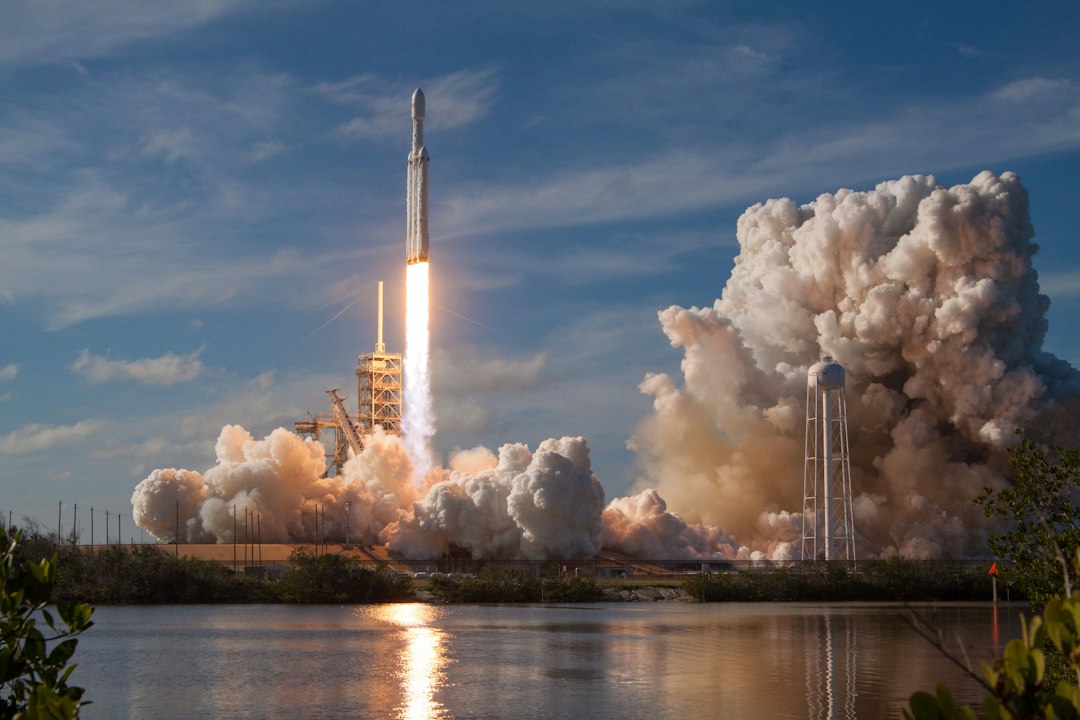
SpaceX has achieved a historical milestone in orbital aerospace engineering by completing a successful Starship upper stage catch directly at its launch tower in Texas. This demonstration proves the feasibility of returning both stages of a super-heavy launch vehicle to its launch site without relying on traditional landing legs or ocean recovery vessels. By executing this high-precision maneuver, the company moves significantly closer to establishing rapid, low-cost access to orbit through fully reusable spacecraft systems.
Architectural Evolution Beyond Traditional Spacecraft Design
To understand the magnitude of the Starship upper stage catch, one must examine the fundamental limitations of previous reusable orbital vehicles. NASA’s Space Shuttle program demonstrated partial reusability over three decades, but its reliance on unpowered glider atmospheric entries and expansive maintenance workflows severely restricted launch frequency. The shuttle required extensive, painstaking overhaul of its delicate thermal protection system—the ceramic tiles shielding the structure from re-entry heat—along with complete ocean retrieval and rebuilding of its solid rocket boosters. These operational overheads drove single-flight expenditures into hundreds of millions of dollars.
In contrast, the architecture validated by SpaceX prioritizes direct mechanical recovery and rapid flight reset. Starship eliminates heavy internal landing leg systems from the vehicle itself. Removing these deployment mechanisms reduces the spacecraft's structural dry mass—the weight of the rocket without fuel—allowing that saved mass to be converted directly into extra payload capability. Rather than touching down on a pad or autonomous ocean drone ship, the vehicle uses specialized external load-bearing pins that mate with tower-mounted retrieval arms during final deceleration.
Engineering Mechanics of Tower Retrieval Systems
The physical maneuver required for a Starship upper stage catch demands extreme precision across control systems, propulsion, and structural dynamics. Returning from orbital velocities requires the spacecraft to dissipate immense kinetic energy using atmospheric braking while positioned horizontally. Only in the final moments of descent does the vehicle perform a powered belly-flop flip maneuver.
The Precision Landing Maneuver
- Aerodynamic Deceleration: The vehicle enters the lower atmosphere using variable-position flaps to adjust drag and maintain precise trajectory vectors.
- Engine Re-ignition: Multiple Raptor engines ignite dynamically to flip the multi-hundred-ton hull from a horizontal fall into a vertical attitude.
- Hover and Translation: The propulsion system throttles down to match vertical descent speed with horizontal alignment controls, guiding the spacecraft into the launch tower infrastructure.
- Pin Engagement: The structural pins protruding from the upper hull settle into dampening slots built into the giant mechanical arms, bringing the rocket to a complete stop.
This method transfers structural deceleration loads onto stationary ground infrastructure rather than carrying heavy shock-absorption gear aboard the flight vehicle. Ground systems can be constructed with heavy structural margins without impacting the vehicle's payload fraction.
Economic Multipliers and Industrial Manufacturing Cadence
Achieving full system recovery unlocks dramatic shifts in space transportation economics. Commercial satellite constellations, deep-space scientific payloads, and lunar logistics depend on reducing cost-per-kilogram metrics to Low Earth Orbit. Traditional expendable rockets destroy their engines and primary airframes on every flight, making engine manufacturing the ultimate bottleneck for mission frequency.
By capturing both the super-heavy booster stage and the orbital upper stage, SpaceX converts rocket production from an ongoing consumable cost into a capital asset deployment model. The primary variable costs shift from vehicle fabrication to propellant loads—chiefly liquid methane and liquid oxygen—which represent a tiny fraction of total hardware expenses. Additionally, localizing recovery directly to the launch pad bypasses complex maritime towing logistics, allowing ground crews to inspect, refuel, and restack vehicles on accelerated schedules.
At the manufacturing level, facility throughput in South Texas has matured to produce upper stages at a steady multi-week cadence. Scaling ground infrastructure alongside vehicle assembly ensures that fleet capacity can support high-density launch manifests required for large-scale orbital constellations and interplanetary transit concepts.
Technical Hurdles in Thermal Shielding and Turnaround
While mechanical capture demonstrates flight control maturity, critical engineering challenges remain before daily operations become operational reality. The primary technical hurdle involves the thermal protection system. Orbital re-entry forces heat shields to endure plasma temperatures exceeding 1,400 degrees Celsius. Ensuring thousands of protective tiles remain intact without requiring extensive manual inspection between flights remains essential.
Furthermore, full operational readiness requires demonstrating rapid in-space propellant transfer. Massive payload missions to the Moon or Mars rely on refilling Starship propellant tanks while in orbit. Validating cryogenic fluid dynamics in microgravity remains a mandatory technological bridge before the architecture can execute Beyond Earth Orbit operational mandates.
Strategic Indicators to Monitor in Upcoming Launches
As flight testing shifts from initial proof-of-concept toward commercial operational readiness, industry analysts must track several quantitative milestones:
- Turnaround Interval: The duration required to inspect, re-certify, and re-fly a previously captured stage.
- Thermal Tile Integrity: The percentage of heat shield tiles surviving atmospheric re-entry without cracking, shedding, or requiring off-line repair.
- Payload Integration Demonstrations: Transitioning from test-mass flights to active commercial deployment, such as launching next-generation internet constellation satellites.
- In-Space Fueling Tests: Orbital rendezvous operations designed to validate ship-to-ship propellant transfers.
If SpaceX maintains its progress across these vector points, the aerospace industry will experience a permanent paradigm shift from rare, high-cost orbital launches to standardized, high-frequency space logistics.
Reporting reference: this briefing is TechWire’s independent analysis. Primary reporting was published by Ars Technica — read the source article.
Related analysis
x86 Processor Evolution: How Legacy Trade-Offs Won
Explore the x86 processor evolution, from 1970s hardware choices to modern computing compatibility, explaining little-endianness and register design.

NSF Leadership Nomination Collapses Amid Science Policy Crisis
Senate pushback on the NSF leadership nomination highlights growing friction over federal science funding and academic research oversight.

TRMNL Frame: Full Color ePaper Display Canvas Debuts
An analysis of TRMNL Frame, a 31.5-inch full color ePaper display using Spectra 6 tech, custom color engines, and in-house manufacturing.