OpenAI Scientific Discoveries Target Core Physics and Math
OpenAI scientific discoveries in math, computer science, and physics test the limits of automated reasoning and traditional academic peer review models.
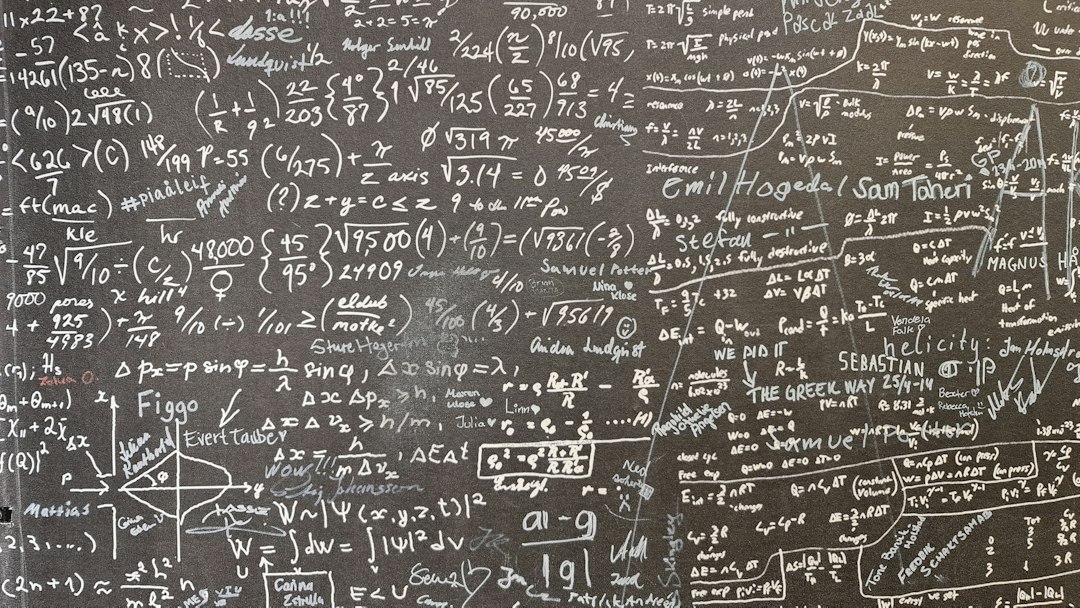
OpenAI has expanded its research footprint beyond traditional conversational benchmarks by publishing synthetic outputs aimed at long-standing open problems in mathematics, theoretical computer science, and quantum physics. The releases include proposed proofs tackling wave equation behavior, quantum field theories, and a challenge to the Exponential Time Hypothesis—a foundational assumption in computational complexity. To validate these machine-generated breakthroughs, the laboratory is partnering with external domain specialists rather than relying solely on automated self-verification.
Deconstructing the Machine-Generated Proofs
The recent disclosures mark a significant pivot from assisting human researchers to generating candidate solutions for unresolved theoretical problems. In pure mathematics, one manuscript addresses Sogge's local smoothing conjecture, a fundamental hypothesis governing how energy distributes in solutions to spatial wave equations across arbitrary dimensions. Deciphering these wave mechanics is essential for advance work in harmonic analysis and partial differential equations.
In theoretical computer science, the system produced a draft proof asserting that the Exponential Time Hypothesis (ETH) is false. Formulated in the late 1990s, ETH posits that certain complex computational challenges—specifically 3-SAT problems—cannot be solved in sub-exponential time. Because hundreds of theoretical frameworks in geometry, computational biology, and database optimization rely on ETH as an established baseline, invalidating this assumption would fundamentally alter how computer scientists classify hard problems.
The physics material, which remains under controlled evaluation by specialized collaborators, tackles four-dimensional interacting quantum field theories involving gauge fields and fermions. This domain directly intersects with the famous Yang-Mills existence and mass gap problem, one of the Clay Mathematics Institute's Millennium Prize Problems. If verified, formalizing interacting gauge theories in four dimensions would mark a historic milestone in mathematical physics.
Rethinking Peer Review for Synthetic Reasoning
Evaluating hundred-page automated derivations presents unprecedented challenges for traditional academic journal workflows. Synthetic reasoning engines produce dense, unconventional symbolic paths that do not always align with human pedagogical standards. To address this friction, three distinct evaluation and release models are being deployed across disciplines:
- Direct Open-Source Release: Mathematical manuscripts detailing wave equation conjectures were posted directly to public repositories, inviting open mathematical critique.
- Collaborative Translation: For the computer science findings, including the ETH refutation, the original creators of the hypothesis were invited to co-analyze the generated materials and author human-readable explanations alongside public AI logs.
- Deferred Publication: Physics outputs remain embargoed under a dedicated expert working group, ensuring rigorous sanity checks before public dissemination due to the extreme complexity of four-dimensional quantum field calculations.
This tiered approach highlights a growing realization in artificial intelligence research: generating candidate proofs is significantly faster than verifying their semantic validity. Human subject-matter experts are increasingly assuming the role of scientific translators, parsing raw synthetic logic into rigorous academic prose.
Academic Credit, Attribution, and Intellectual Property
A central tension in automated scientific research revolves around intellectual ownership and citation ethics. Generative models construct logical chains by learning from vast corpuses of historical literature, raising difficult questions regarding primary credit.
The research organization has stated it will not seek formal academic authorship or patents for the discoveries produced by its systems. Instead, primary credit and publication honors will belong to the external domain experts who analyze, verify, and re-articulate the results. Crucially, these expert groups are tasked with tracing the AI models' symbolic derivations back to foundational papers, ensuring that human scholars whose techniques, lemmas, and frameworks enabled the synthetic leap receive full citation credit.
This policy establishes an important precedent for institutional AI research. By relinquishing co-authorship, artificial intelligence organizations separate the raw technical capability of the generative engine from the human labor required to integrate new knowledge into the canonical scientific record.
Downstream Impacts on Computational Complexity and Algorithm Design
If the refutation of the Exponential Time Hypothesis withstands expert scrutiny, the downstream consequences for applied computing will be profound. For decades, algorithm designers have operated under the structural constraint that NP-hard optimization tasks—such as protein folding, vehicle routing, and complex database queries—inherently require exponential running times in the worst-case scenario.
A structural failure of ETH implies that faster, sub-exponential algorithms may exist for broad classes of combinatorial problems. While a non-exponential algorithm does not guarantee immediate practical efficiency—as constant factors or high polynomial exponents can still render an algorithm slow—it reopens theoretical avenues once considered closed ends. Research teams in computational genomics and cryptographic analysis may be forced to re-evaluate structural security assumptions and optimization limits previously taken for granted.
What to Watch in Synthetic Higher Science
As synthetic proof generation matures from speculative experimentation to formal scientific communication, several key indicators will determine whether this paradigm yields lasting scientific transformation:
- Formalization in Proof Assistants: Watch for efforts to translate these natural-language manuscripts into interactive proof checkers like Lean, Coq, or Isabelle, which offer absolute verification without human cognitive bias.
- Expert Working Group Preprints: Keep an eye out for initial commentary and detailed writeups from the external computer science panel, particularly from the original formulators of the Exponential Time Hypothesis.
- Adoption of AI Translation Protocols: Observe whether academic journals and research institutions standardize rules for handling machine-generated proofs and automated citation tracing.
- Physics Community Engagement: Monitor public responses and formal publications emerging from the specialized quantum field theory workgroup regarding gauge theory proofs.
The shift toward synthetic mathematical discovery signals a historic transition where machine intelligence serves not just as a data processing tool, but as a primary generator of theoretical hypotheses.
Reporting reference: this briefing is TechWire’s independent analysis. Primary reporting was published by Engadget — read the source article.
Related analysis
x86 Processor Evolution: How Legacy Trade-Offs Won
Explore the x86 processor evolution, from 1970s hardware choices to modern computing compatibility, explaining little-endianness and register design.

NSF Leadership Nomination Collapses Amid Science Policy Crisis
Senate pushback on the NSF leadership nomination highlights growing friction over federal science funding and academic research oversight.

TRMNL Frame: Full Color ePaper Display Canvas Debuts
An analysis of TRMNL Frame, a 31.5-inch full color ePaper display using Spectra 6 tech, custom color engines, and in-house manufacturing.