Nvidia AI Chip Dominance Faces Threats Beyond Jensen Huang
Beyond leadership changes, Nvidia AI chip dominance faces structural threats from custom hyperscaler silicon, automated CUDA porting, and China…
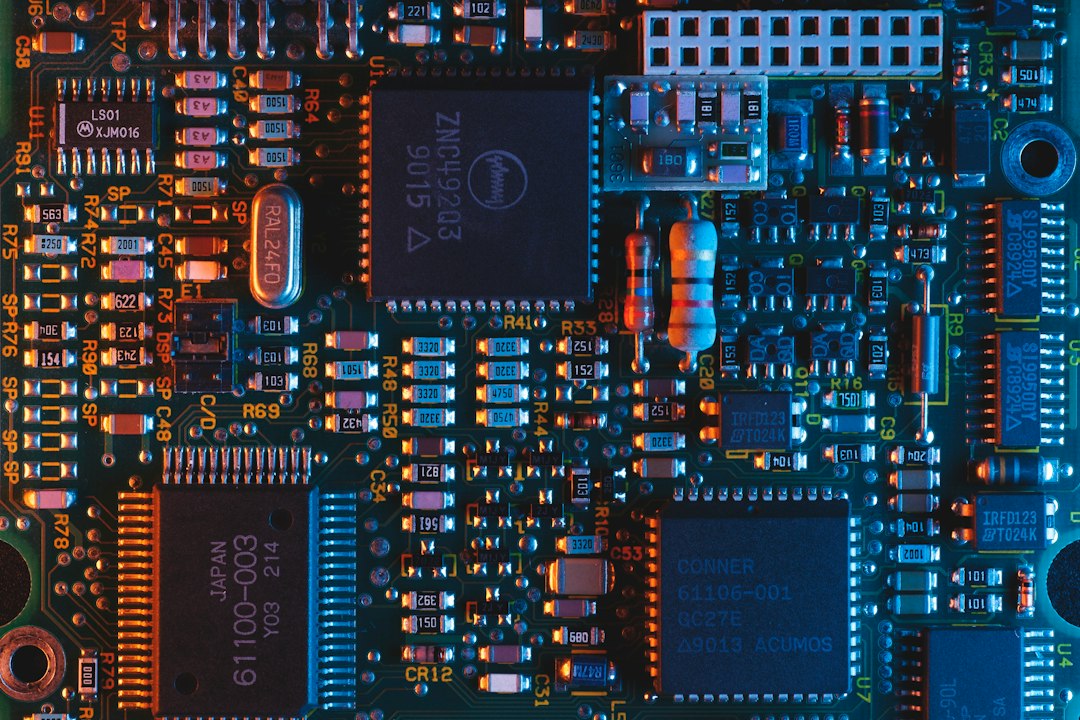
Nvidia's commanding position in the artificial intelligence hardware ecosystem is encountering severe structural pressure. While executive turmoil and leadership changes draw immediate headline attention, deeper market dynamics—ranging from custom cloud silicon and AI-automated software porting to geopolitical trade barriers—are actively reshaping the competitive semiconductor landscape. As compute requirements shift from massive model training to distributed execution, the hardware moat that historically secured the chip giant's margins is facing its toughest challenge yet.
The Workload Pivot: From Heavy Training to Real-Time Inference
For the past several years, the race to build foundation models required raw compute power and unified memory architectures. Nvidia dominated this early wave because its parallel processing hardware was exceptionally suited for massive training workloads. However, the artificial intelligence industry is undergoing a fundamental shift toward running existing models and supporting autonomous agents—a process known as inference.
Inference workloads prioritize low latency, cost efficiency, and power consumption over absolute floating-point operation capacity. While training happens periodically in large centralized facilities, inference occurs continuously across cloud servers and edge devices. This functional shift changes the underlying hardware demands:
- Specialized Accelerators: Dedicated inference processors can handle pre-trained model weights at a fraction of the power consumption of standard graphics processors.
- Increased CPU Integration: Complex multi-step agentic workflows require strong general-purpose central processing units to manage logic, orchestration, and database queries alongside vector calculations.
- Memory Bandwidth Optimization: Running pre-trained weights requires rapid memory access rather than raw computational density, allowing streamlined Application-Specific Integrated Circuits (ASICs) to compete effectively.
Recognizing this transition, major chip designers have scrambled to acquire specialized inference startups to bolster their product lines. However, non-traditional chipmakers and cloud platforms are capitalizing on this pivot even faster.
Hyperscaler In-Sourcing and Custom Silicon Pressure
The largest customers driving accelerator sales—cloud infrastructure giants including Google, Amazon, and Microsoft—are actively reducing their reliance on third-party vendors. Buying off-the-shelf accelerators exposes these hyperscalers to tight supply constraints and high profit margins imposed by single-source suppliers.
To reclaim financial control, cloud providers are allocating billions toward custom cloud silicon. Designing proprietary ASICs tailored to internal software frameworks allows hyperscalers to drastically reduce operational expenses for both internal applications and customer-facing cloud products. Furthermore, traditional semiconductor rivals like AMD have made steady inroads into enterprise data centers. AMD's market presence in AI acceleration has expanded significantly over recent cycles, bolstered by strategic acquisitions aimed at embedding model parameters directly into silicon architectures to achieve ultra-efficient computation.
Cloud Computing Cost Structure Shift:
[Commercial GPUs] ---> High Margin Vendor Lock-in & Supply Bottlenecks
[Custom Cloud ASICs] -> Lower Unit Cost, Tailored Workload Efficiency & In-House Control
As cloud platforms transition internal workloads to their own processors, commercial chipmakers face a shrinking addressable market among their highest-volume buyers.
Automated Code Porting and the Erosion of CUDA's Software Moat
Historically, Nvidia's primary competitive defense was not merely its physical silicon, but its proprietary software ecosystem. Introduced nearly two decades ago, the Compute Unified Device Architecture (CUDA) platform created an expansive software barrier. Developers wrote deep learning libraries, acceleration code, and neural network frameworks specifically for CUDA, making the migration to alternative hardware architectures prohibitively expensive and time-consuming.
Paradoxically, modern artificial intelligence models are actively dismantling this software lock-in. Advanced generative coding tools can now analyze, refactor, and port proprietary GPU code to run on open-source compiler platforms or competing hardware architectures with minimal human intervention.
The Rise of Automated Hardware Translation
- Instant Code Conversion: Specialized automation platforms leverage large language models to translate CUDA calls into open frameworks like AMD's ROCm or custom ASIC instructions within hours.
- Automated Optimization: Machine learning systems can automatically tune pipeline parameters for target hardware, matching up to 80 percent or more of native efficiency almost immediately.
- Decoupled Frameworks: Higher-level machine learning frameworks are increasingly abstracting away underlying hardware dependencies, allowing developers to target multiple chip architectures simultaneously.
When code porting becomes automated, the switching costs that once protected proprietary hardware ecosystems evaporate, forcing vendors to compete purely on cost-per-watt and hardware availability.
Geopolitical Fractures and Chinese Domestic Ecosystems
Geopolitical trade tensions present a parallel challenge to global market dominance. Strict regulatory controls imposed by Washington have restricted the export of cutting-edge accelerators to major Asian markets. Historically, high-tech exports to China represented roughly one-fifth of global accelerator revenue for leading American vendors; that figure has now fallen to single digits in official filings.
Rather than stalling technological adoption, these export restrictions have catalyzed rapid domestic innovation within foreign tech sectors. Sanctioned industrial conglomerates, such as Huawei, have designed high-performance computing clusters capable of interconnecting vast numbers of lower-yield domestic processors.
Emerging foreign artificial intelligence research organizations are training state-of-the-art open-weight models entirely on non-Western hardware stacks. As these open-weight models gain global popularity, they create an expanding international market for alternative processor architectures that operate outside the Western semiconductor supply chain.
Strategic Realignment: What to Watch Next
The convergence of shifting compute demands, customer in-sourcing, automated software translation, and trade friction leaves the semiconductor market at a critical juncture. Managing this landscape requires balancing forward-looking hardware research with long-term capital allocation.
Because semiconductor production pipelines require multi-year development cycles, product strategies initiated today will determine market standing years into the future. Industry analysts often caution against transitioning from visionary engineering-led product roadmaps to short-term financial management during periods of disruptive market change.
To evaluate how market dynamics will unfold, tech industry observers should monitor four critical metrics:
- Hyperscaler CapEx Allocation: The percentage of capital expenditure big cloud providers allocate to custom internal silicon versus commercial GPUs.
- Translation Efficiency Benchmarks: The speed and performance parity achieved by automated LLM tools porting CUDA workloads to rival chip designs.
- Open-Source Hardware Frameworks: The global adoption rate of open-weight neural models trained natively on non-Nvidia architectures.
- Inference-Specific Deployments: The market share captured by low-latency inference chips as autonomous agentic workflows scale worldwide.
Reporting reference: this briefing is TechWire’s independent analysis. Primary reporting was published by WIRED — read the source article.
Related analysis

US–China Tech Talks Put Chips and Critical Minerals in Focus
A sourced briefing on how chip controls and critical-mineral policy shape US–China technology talks, supply chains, and business planning.

x86 Processor Evolution: How Legacy Trade-Offs Won
Explore the x86 processor evolution, from 1970s hardware choices to modern computing compatibility, explaining little-endianness and register design.

NSF Leadership Nomination Collapses Amid Science Policy Crisis
Senate pushback on the NSF leadership nomination highlights growing friction over federal science funding and academic research oversight.