jwst space telescope ice discovery
JWST Space Telescope Ice Discovery Reveals Exoplanet Origins
The JWST space telescope ice discovery around Beta Pictoris shows primordial water and carbon dioxide preserved from before the star's formation.
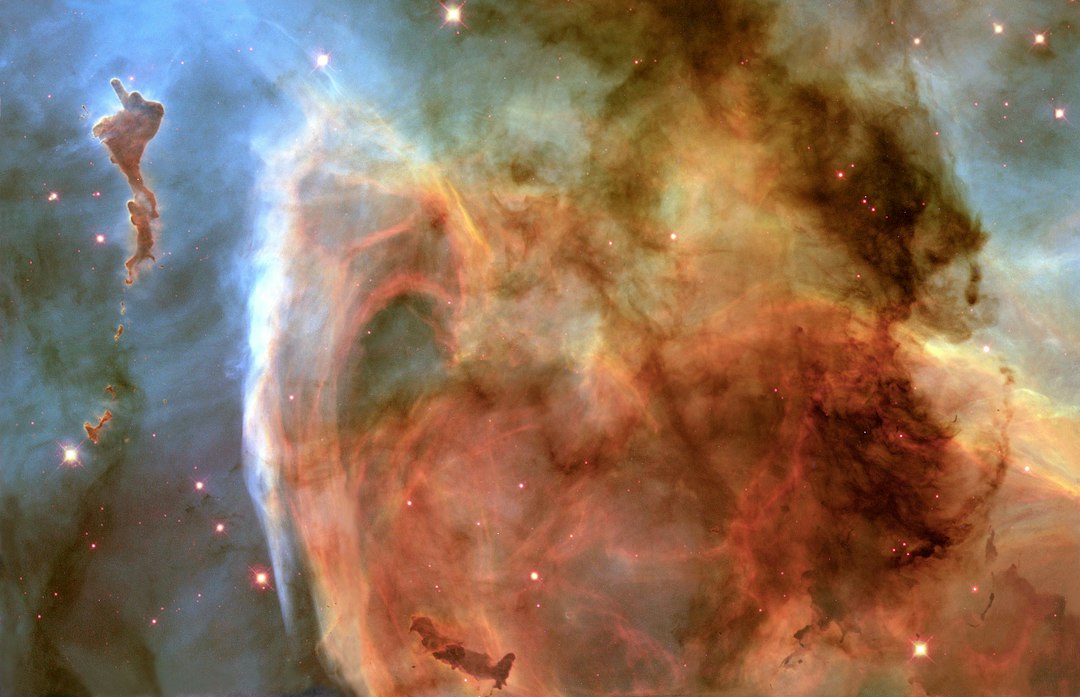
Astronomers analyzing data from the James Webb Space Telescope have identified pre-solar amorphous water ice and carbon dioxide embedded within the protoplanetary debris disk surrounding Beta Pictoris. This JWST space telescope ice discovery demonstrates that volatile compounds crucial for forming habitable environments are inherited directly from interstellar molecular clouds rather than generated locally during star birth. The presence of these preserved frozen compounds confirms that planetesimal collisions constantly cycle ancient, volatile-rich material into young planetary environments across the galaxy.
Located approximately 64 light-years from Earth, Beta Pictoris has served as a benchmark object for studying planetary genesis since its surrounding disk was first imaged in 1984. At just 20 million years old, the system presents an ideal edge-on geometry, enabling high-precision orbital spectroscopy. The recent findings, derived from observations using Webb's Near Infrared Spectrograph (NIRSpec), provide key empirical evidence explaining how fragile compounds survive the intense radiation environments surrounding young stars.
Spectroscopic Breakthroughs via NIRSpec Instrumentation
Detecting frozen volatiles within circumstellar disks requires isolating subtle reflection signals from the blinding glare of the host star. The research team utilized NIRSpec in an integral field unit mode, capturing comprehensive spectroscopic data across wavelengths ranging from 0.6 to 5.2 micrometers for every point in the observational field. By subtracting stellar brightness with high-precision algorithms, the instrument uncovered delicate light absorption patterns indicative of solid-phase molecules.
Water ice demonstrates a distinct absorption profile near 3 micrometers, while solid carbon dioxide absorbs light strongly around 4.27 micrometers, with its heavier isotopic variant, carbon-13 dioxide, registering at 4.39 micrometers. Previous ground-based and space-borne observatories failed to detect these frozen signatures because volatile molecules on outer grain surfaces are rapidly degraded by stellar ultraviolet photons. NIRSpec's unmatched sensitivity and spectral resolution allowed scientists to extract clear signatures from points positioned roughly 100 astronomical units away from the central star.
Amorphous Molecular Structures and Interstellar Origins
The physical structure of the detected ice offers critical insights into its thermal history. When water freezes at moderate temperatures and low pressures, its molecules naturally align into a rigid crystal lattice. Crystalline water ice displays a sharp, narrow spectroscopic absorption feature just above 3 micrometers. However, the data gathered by Webb showed no such feature. Instead, the analysis revealed that less than 7 percent of the water ice present possesses a crystalline structure.
The overwhelming majority of the ice exists in an amorphous state—a glassy, disordered solid phase. Amorphous ice forms exclusively when water vapor freezes instantaneously in hyper-cold environments where molecules lack the thermal energy required to arrange themselves into a lattice. Key aspects of this molecular configuration include:
- Thermal Maintenance: Maintaining an amorphous state requires ambient temperatures to remain strictly below 100 Kelvin (minus 173 degrees Celsius).
- Interstellar Pre-existence: The presence of un-crystallized ice indicates that these frozen grains coalesced within cold molecular clouds prior to the ignition of Beta Pictoris.
- Matrix Trapping: Spectroscopic broadening of the carbon dioxide absorption feature revealed that CO2 molecules are trapped directly inside the porous water ice matrix rather than existing as isolated pure ice deposits.
This mixed matrix configuration—often described as "dirty ice"—significantly enhances the thermal stability of frozen volatiles. Theoretical models confirm that pure water ice grains erode quickly under harsh ultraviolet radiation, whereas heterogeneously mixed molecular matrices withstand intense photo-evaporation far longer.
Planetesimal Collisions as Volatile Delivery Engines
Despite the protective qualities of dirty ice, radiation from Beta Pictoris should still deplete surface dust ice within centuries. To account for the persistent abundance of both frozen volatiles and carbon monoxide gas in the outer disk, dynamic replenishment mechanisms must be at work. Researchers conclude that frequent, violent collisions between larger planetesimals continuously shatter icy bodies, releasing fresh interior material into space.
Planetesimals act as natural vaulting structures, shielding primordial interstellar ice deep beneath protective rocky crusts. As these bodies orbit within the crowded disk, gravitational perturbations trigger frequent impact events. These impacts pulverize large objects, exposing ancient, un-irradiated ice stores that were buried during the earliest phases of system formation.
This collisional feedback model aligns with previous observations of Beta Pictoris, including asymmetrical dust structures in the southwestern disk sector thought to be the expanding debris field of a massive impact. The quantitative measurements from Webb show that carbon dioxide comprises approximately 11 percent of the total ice mass, placing it within the 2.5 to 30 percent range measured in Solar System comets. This strong compositional alignment suggests that the chemical processes forming icy bodies in our Solar System are widespread throughout the cosmos.
Implications for Planetary Habitability and Exoplanet Models
The survival of primordial interstellar ice through the star-formation phase alters theoretical models of planetary composition. Rather than relying on late-stage chemical synthesis to create water and atmospheric gases, newly forming planets appear to inherit complex volatile mixtures directly from the interstellar medium.
If amorphous dirty ice is a standard component of circumstellar disks, growing protoplanets in outer orbital zones naturally accrete vast reservoirs of water and carbon compounds. Sub-surface oceans, volatile-rich crusts, and thick early atmospheres may consequently represent typical outcomes of planetary assembly rather than rare cosmic anomalies. This mechanism provides a direct pathway for delivering life-supporting ingredients to terrestrial worlds during their accretion phase.
Future Targets for Astronomical Volatile Mapping
Following the success of these NIRSpec observations, astronomers are preparing to expand spectroscopy surveys across broader samples of nearby star systems. Key priorities for upcoming observational cycles include:
Expanding Sample Sizes
- Surveying protoplanetary and debris disks across various stellar spectral types to establish whether ice survival rates correlate with host star mass.
- Comparative analysis of younger protoplanetary systems to trace the structural evolution of ice from initial cloud collapse through planetary maturity.
Cross-Instrument Correlation
- Combining JWST infrared spectroscopy with sub-millimeter gas mapping from ground-based arrays like the Atacama Large Millimeter/submillimeter Array (ALMA) to track the interplay between frozen and gaseous volatile phases.
- Utilizing future extremely large telescopes to analyze the spatial distribution of planetesimal debris fields at higher angular resolutions.
By continuing to map the chemical makeup of extrasolar debris disks, researchers will determine whether the volatile-rich environment of early Beta Pictoris represents a universal template for planet formation.
Reporting reference: this briefing is TechWire’s independent analysis. Primary reporting was published by Ars Technica — read the source article.
Related analysis
x86 Processor Evolution: How Legacy Trade-Offs Won
Explore the x86 processor evolution, from 1970s hardware choices to modern computing compatibility, explaining little-endianness and register design.

NSF Leadership Nomination Collapses Amid Science Policy Crisis
Senate pushback on the NSF leadership nomination highlights growing friction over federal science funding and academic research oversight.

TRMNL Frame: Full Color ePaper Display Canvas Debuts
An analysis of TRMNL Frame, a 31.5-inch full color ePaper display using Spectra 6 tech, custom color engines, and in-house manufacturing.