How Tailscale Network Performance Boosts Enterprise Mesh VPNs
An analysis of Tailscale network performance updates, detailing multi-queue packet processing, netmap caching, and zero-copy Linux optimizations.
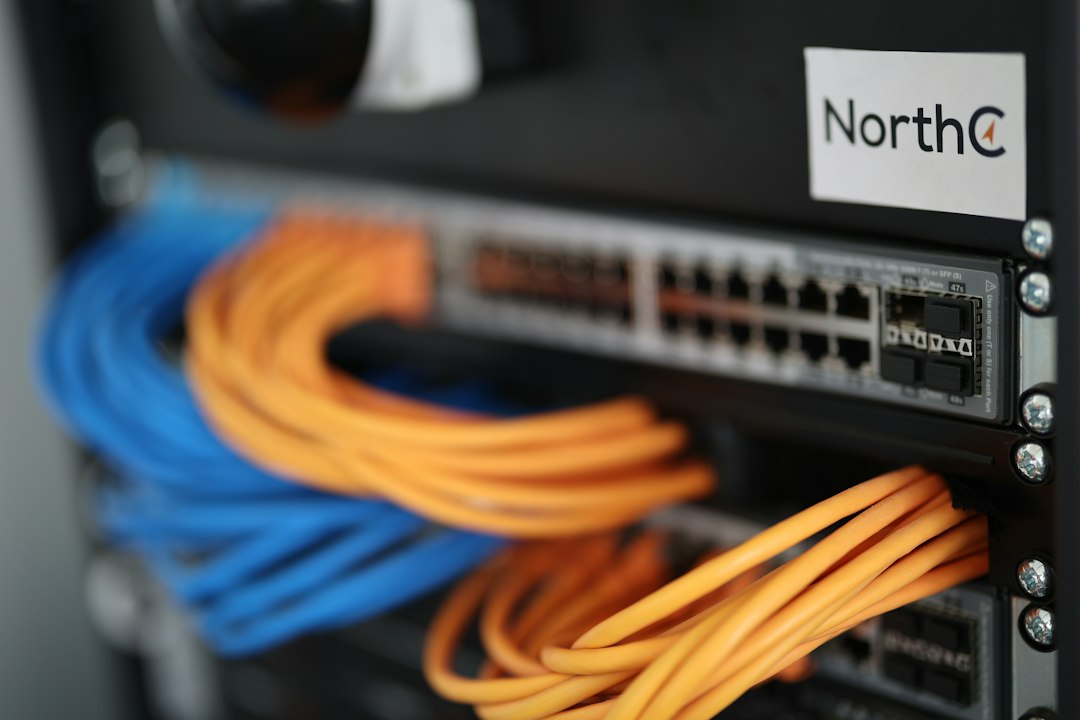
Mesh networking provider Tailscale has unveiled a series of architectural refinements designed to significantly increase data throughput, reduce latency, and lower memory overhead across its virtual private network overlay. By re-engineering packet buffer allocations, introducing multi-queue execution pipelines, and implementing local network map caching, the updates target high-throughput environments such as remote development clusters, automated AI agent workflows, and industrial edge computing. These enhancements address long-standing throughput ceilings inherent in user-space WireGuard implementations while insulating nodes from control plane reachability issues.
Overcoming the Single-Thread Bottleneck in Overlay Networks
Historically, virtual overlay networks running in user space have faced performance trade-offs compared to kernel-native solutions. In complex network topologies—where gateway nodes like subnet routers, exit nodes, and application connectors handle data streams for dozens or hundreds of downstream peers—packet processing was bound to a single-threaded execution thread to prevent out-of-order packet delivery. While effective for basic traffic enforcement, this architecture created artificial bottlenecks on modern multi-core server hardware.
To resolve this structural limitation, Tailscale is introducing a multi-queue parallel processing model designed to scale proportionally with system hardware resources rather than peer counts. Under this new paradigm, discrete packet streams are dynamically isolated into parallel execution channels. Each traffic flow remains pinned to an assigned worker queue to guarantee sequence integrity, but processing load is distributed evenly across available CPU cores.
This parallelized handling drastically reduces packet queueing delays and increases aggregate system capacity. Cloud-based gateway nodes and exit devices serving heavy user populations stand to gain the most, as multi-core hardware can finally process multiple concurrent encrypted connections at full hardware capacity rather than choking on a single core's clock speed.
Zero-Copy Buffer Management and Vectorized Kernel I/O
At the data plane level, achieving multi-gigabit throughput over WireGuard requires minimizing memory allocation churn and payload copying within the operating system stack. Linux networking frameworks often leverage Generic Receive Offload (GRO) to aggregate small incoming network packets into larger contiguous chunks, frequently up to 64 kilobytes, before presenting them to user-space applications.
In previous iterations of Tailscale's user-space networking engine (wireguard-go), handling these aggregated packets required allocating a fixed 64-kilobyte memory buffer for every inbound frame—even if the underlying payload was merely a 1-kilobyte packet. The application then copied the isolated packet into a newly allocated space before decrypting it. This pattern created considerable memory inflation and spent valuable CPU cycles on redundant byte-copying operations.
The revised architecture eliminates these intermediate allocations on Linux and Android systems by adopting an in-place pointer indexing strategy. Instead of copying small payloads out of large memory buffers, the software now reads packet boundaries directly within the existing buffer structure. Multiple small packets can reside in a single memory allocation without triggering fresh heap allocations or data copies. Complementing this memory optimization is the integration of vectorized I/O system calls (writev). This allows the networking client to pass fragmented data structures directly to the operating system kernel in a single system call, bypassing the need to consolidate payload fragments in user space first.
Offline Resilience Through Local Network Map Caching
Beyond raw throughput gains, mesh networks frequently suffer from initialization latency when deployed in sub-optimal physical network environments. Standard operation requires a client node to establish a connection with the centralized control plane upon boot to receive a network map (netmap), which outlines topology rules, cryptographic keys, and reachable peers. In degraded environments—such as high-latency satellite links, restrictive hotel networks, or volatile cellular setups—negotiating this initial exchange can delay peer-to-peer data flow by hundreds of milliseconds or fail entirely.
To decouple data plane availability from immediate control plane connectivity, Tailscale has introduced local netmap caching. When enabled, nodes persist an encrypted copy of their validated network map to local disk storage. Upon system boot or service restart, the node immediately initializes peer connections using the cached topology while asynchronously establishing contact with the control plane in the background.
This warm-start capability reduces peer discovery and channel establishment times by up to two orders of magnitude in poor network conditions. However, the operational tradeoff lies in disk I/O management. Systems utilizing wear-sensitive flash media, such as single-board computers booted from micro-SD cards, or enterprise environments managing massive network maps with thousands of nodes, may need to selectively evaluate this feature to avoid storage overhead.
Key Architectural Improvements in the Updated Networking Pipeline
The combined technical updates alter how data moves through the overlay network pipeline:
- Elimination of Redundant Memory Allocations: In-place packet indexing processes payloads directly inside GRO receive buffers, lowering RAM usage and boosting throughput by approximately 5% on Linux systems.
- Multi-Queue Concurrency: Subnet routers and exit nodes divide independent peer connections across separate CPU cores, increasing aggregate throughput for enterprise cloud gateways.
- Vectorized Kernel Operations: Implementation of
writevsystem calls passes discrete data segments to the host kernel in unified operations, minimizing context switching overhead. - Shorter Pipeline Queues: Reduced intermediate queue depths decrease packet dwell time inside the application stack, lowering end-to-end latency during traffic spikes.
- Cached Control Plane Operations: Local disk persistence of topology maps allows nodes to establish immediate encrypted peer links without waiting for control plane responses.
What to Watch: Rollout Schedule and Enterprise Impact
These performance enhancements are being phased into production across upcoming software releases. The zero-copy buffer modifications and reduced queue depths are scheduled to reach general availability in the v1.104 client update. The multi-queue execution framework for subnet routers, app connectors, and exit nodes will follow in updates scheduled for the second half of 2026.
Netmap caching is currently available behind an opt-in feature flag for testing and is slated to become the default behavior in v1.104 for desktop and server platforms, with mobile operating systems receiving the feature in subsequent releases. Furthermore, development efforts are expanding toward built-in performance diagnostic tools, allowing system administrators to benchmark, profile, and troubleshoot mesh throughput directly from the command line.
As organizations increasingly shift from traditional hub-and-spoke VPN architectures toward zero-trust mesh overlays, Tailscale's low-level efficiency investments demonstrate that software-defined networking in user space can match demanding enterprise performance requirements.
Reporting reference: this briefing is TechWire’s independent analysis. Primary reporting was published by Hacker News — read the source article.
Related analysis

Military Satellite Jamming: UK Operational Space Defense
An analysis of the UK deploying ground-based military satellite jamming technology to counter orbital surveillance and protect critical defense assets.
US–China Tech Talks Put Chips and Critical Minerals in Focus
A sourced briefing on how chip controls and critical-mineral policy shape US–China technology talks, supply chains, and business planning.
How to Protect a PC From Power Surges and Grid Outages
Protect a PC from surges and outages with safer shutdown, UPS, and surge-protection guidance—including when to call a licensed electrician.