House Lawmakers Propose AI Bubble Bailout Resolution
A legislative effort around an AI bubble bailout resolution seeks to prevent corporate rescues and protect public funds during tech market shifts.
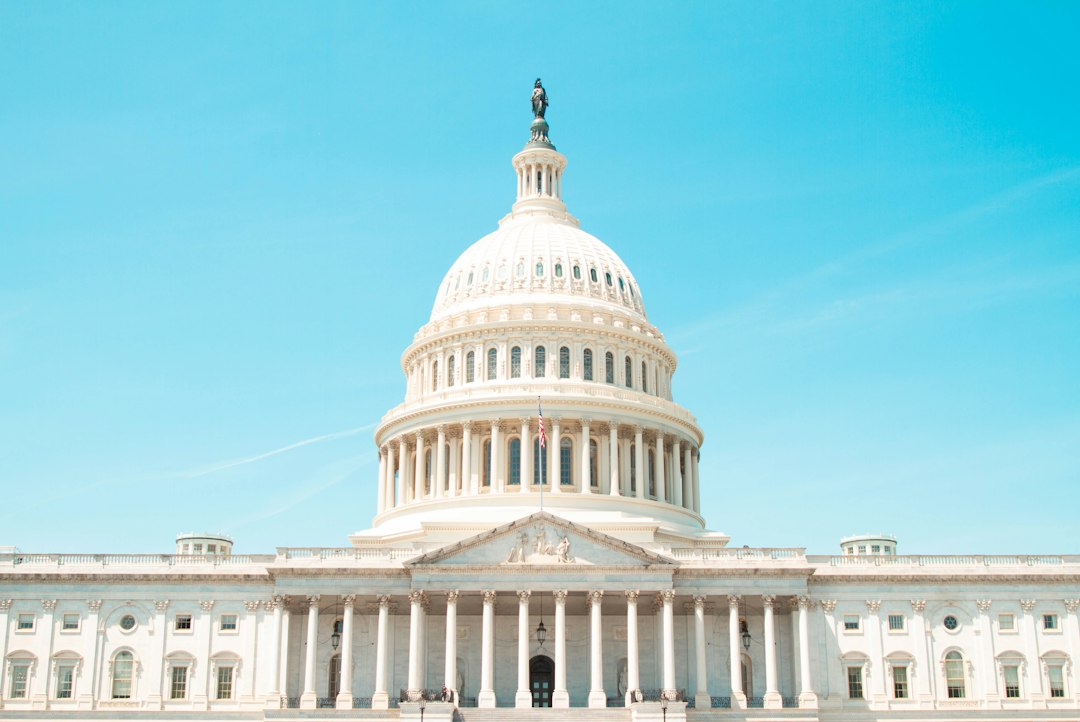
Key members of the U.S. House of Representatives have introduced an AI bubble bailout resolution designed to establish an explicit political and legislative stance against federal financial interventions for overleveraged technology corporations. Spearheaded by senior figures within the Congressional Progressive Caucus and the House Financial Services Committee, the non-binding measure addresses mounting systemic risks tied to historic capital expenditures in advanced computing infrastructure. By pre-emptively rejecting emergency liquidity facilities, direct capital infusions, or regulatory safety nets for failing artificial intelligence ventures, the resolution seeks to enforce market discipline while shifting federal safety-net priorities toward displaced workers and broader macroeconomic stabilization.
The policy move comes amid growing institutional scrutiny over the financial instruments funding the current artificial intelligence boom. As capital outlays for specialized processing hardware, data center construction, and gigawatt-scale energy procurement reach record levels, lawmakers are drawing explicit parallels to prior market corrections. By establishing an early legislative marker, sponsor representatives intend to prevent a repeat of historical corporate bailouts, insisting that private equity, venture funds, and corporate balance sheets bear the full financial consequences if enterprise monetization fails to keep pace with infrastructure debt.
Financial Mechanics Behind the Technology Infrastructure Expansion
The current wave of artificial intelligence development relies on an unprecedented concentration of capital expenditure. Leading technology conglomerates and specialized computing providers have committed hundreds of billions of dollars to secure high-performance graphics processing units (GPUs), construct specialized facility footprints, and negotiate long-term power purchase agreements. However, a significant portion of this growth is funded through increasingly complex financial engineering rather than immediate cash flow from end-user software revenues.
To finance these vast capital demands, market participants have turned to private credit markets, debt-backed hardware leasing, and off-balance-sheet special purpose vehicles (SPVs). These opaque borrowing arrangements allow firms to secure hardware clusters by collateralizing the underlying physical infrastructure or future compute capacity. Because private credit operates with less standardized disclosure than public corporate bond markets, regulatory visibility into the total systemic debt load remains limited. Consequently, financial analysts point to elevated price-to-earnings multiples across major equity indexes that rival previous historical technology bubbles, raising questions about market resiliency if enterprise adoption curves plateau.
Core Provisions of the Anti-Bailout Legislative Measure
The congressional resolution outlines a multi-pronged framework intended to insulate public funds from private sector speculative risks while establishing strict legal accountability for corporate governance failures. The proposed policy directly targets the moral hazard that arises when systemic enterprise vendors assume excessive debt under the assumption of federal intervention during a liquidity crisis.
Key structural demands embedded within the legislative text include:
- Prohibition of Direct Financial Assistance: Rejection of emergency loan programs, special capital injections, or asset-purchasing facilities managed by federal monetary authorities to support insolvent technology firms.
- Standard Bankruptcy Resolution: Mandating that distressed computing platforms and infrastructure providers navigate ordinary judicial bankruptcy processes without custom regulatory shielding.
- Executive Compensation Clawbacks: Enforcing strict civil and criminal accountability for corporate officers engaging in fraudulent or reckless financing schemes, including the mandatory recovery of executive bonuses, real estate, and secondary liquid assets.
- Automatic Worker Stabilizers: Directing federal response mechanisms toward direct economic support for labor, including enhanced unemployment protections, job retraining programs, and municipal service buffers.
- Pension Fund Safeguards: Recommending heightened fiduciary oversight to protect public retirement plans and institutional funds from overexposure to high-risk private credit tech debt.
Macroeconomic Risk and the Comparison to Historical Crises
The policy debate surrounding the AI bubble bailout resolution reflects deeper structural lessons learned from previous economic disruptions, most notably the 2000 dot-com deflation and the 2008 global financial crisis. In both historical instances, speculative capital poured into highly valued asset classes—first telecommunications fiber and early internet equities, and later complex residential mortgage-backed securities. When underlying commercial revenues failed to service the debt backing those assets, systemic financial contagion ensued.
In the current cycle, the risk of financial contagion is amplified by the interconnectedness of modern hyperscale computing. Major cloud providers, sovereign wealth funds, traditional investment banks, and specialized private equity firms share overlapping exposure to compute infrastructure assets. If smaller AI developers or infrastructure resellers default on their hardware loans, the collateral—rapidly depreciating silicon processing units—may yield only a fraction of its original book value. By filing this resolution, lawmakers aim to clarify that the debt burden must remain within private capital channels, ensuring that corporate insolvency does not transfer liabilities onto taxpayers or municipal budgets through higher public utility costs and localized economic fallout.
Impact on Venture Capital and Enterprise Debt Pricing
While non-binding resolutions do not immediately alter statutory law, public legislative warnings exert significant psychological and legal force on financial markets. Lenders and private credit underwriters operating in the technology sector closely monitor congressional sentiment to assess political risk. A clear signal that political appetite for corporate rescues is nonexistent can induce credit tightening across high-risk technology lending markets.
If institutional investors perceive that federal backstops are off the table, the cost of capital for speculative AI ventures is likely to rise. Private credit providers may demand higher interest rates, stricter collateral requirements, or shorter loan maturity schedules for hardware purchases. This shift in debt pricing could force startup management teams and enterprise software vendors to re-evaluate burn rates, prioritize immediate software monetization over long-term compute expansion, and consolidate redundant infrastructure projects. In turn, a more conservative capital allocation model could help cool speculative valuations before systemic leverage reaches unsustainable limits.
Financial Indicators and Policy Milestones to Watch
As debate over technology market valuations and regulatory oversight intensifies, enterprise analysts and policy observers should track several key market and legislative developments:
Private Credit Disclosure Frameworks
Watch for potential actions by the Securities and Exchange Commission (SEC) and banking regulators to require enhanced disclosure around private credit exposures and hardware-collateralized loans within non-bank financial institutions.
Enterprise Software Revenue Maturation
Monitor the conversion rate of generative AI pilots into recurring corporate software revenue. A widening gap between hyperscaler infrastructure spending and software licensing revenue will serve as a primary indicator of market stress.
Congressional Committee Action
Follow whether financial committees in either chamber schedule formal oversight hearings regarding tech sector debt packaging, systemic market risks, or federal utility grid strain caused by accelerated data center growth.
Secondary Market Hardware Valuations
Track resale and liquidation pricing for previous-generation enterprise computing hardware. Declining secondary market valuations for processing chips directly weaken the collateral backing complex private credit debt instruments.
Reporting reference: this briefing is TechWire’s independent analysis. Primary reporting was published by Congressional Progressive Caucus — read the source article.
Related analysis

x86 Processor Evolution: How Legacy Trade-Offs Won
Explore the x86 processor evolution, from 1970s hardware choices to modern computing compatibility, explaining little-endianness and register design.

NSF Leadership Nomination Collapses Amid Science Policy Crisis
Senate pushback on the NSF leadership nomination highlights growing friction over federal science funding and academic research oversight.

TRMNL Frame: Full Color ePaper Display Canvas Debuts
An analysis of TRMNL Frame, a 31.5-inch full color ePaper display using Spectra 6 tech, custom color engines, and in-house manufacturing.