Google DeepMind Genie 4 Advances AI World Simulation
Google DeepMind Genie 4 combines real-time video generation and reasoning models to build interactive virtual environments for robotics and gaming.
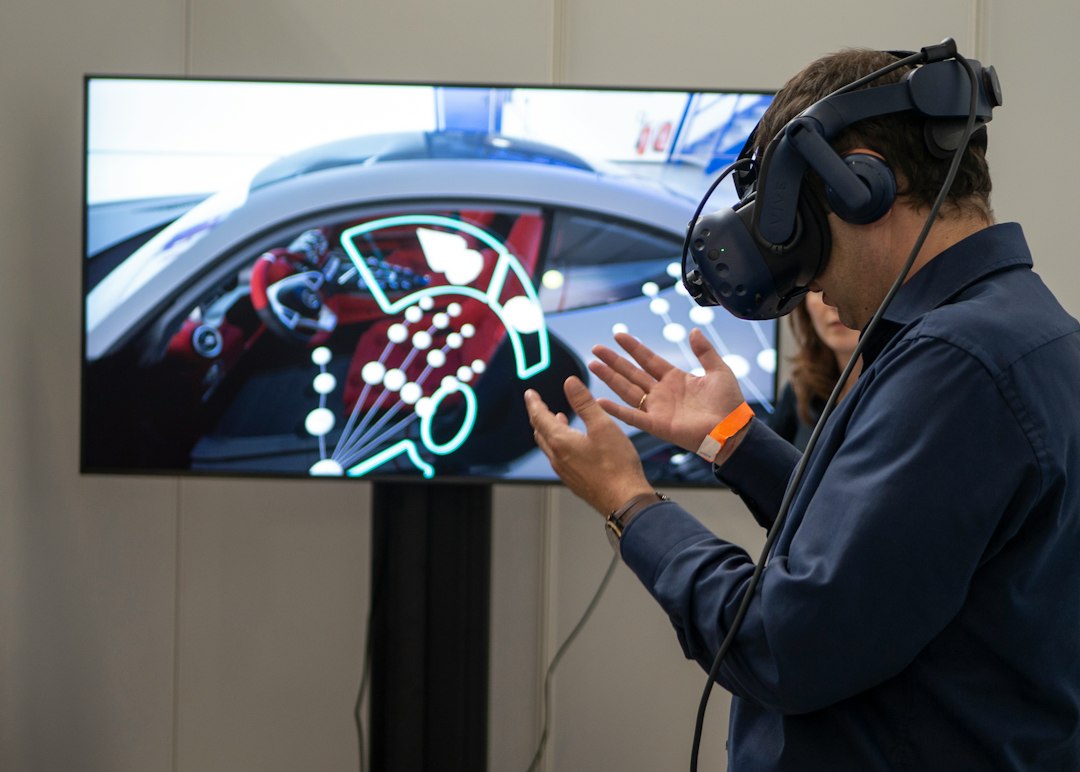
Google DeepMind Genie 4 represents a significant evolution in generative artificial intelligence, moving beyond static media production into real-time, steerable environment generation. By integrating deep reasoning engines with pixel-level rendering tools, the architecture allows users to explore and alter simulated spaces on the fly through direct user controls and natural language. This step forward signals a shift toward interactive world models that bridge the gap between abstract algorithmic planning and physical visual feedback.
The deployment of Google DeepMind Genie 4 highlights how frontier research labs are tackling the challenge of temporal and spatial consistency. Rather than operating purely as a text-to-video generator, the system functions as a dynamic sandbox capable of reacting instantly to user interventions, dynamic physics shifts, and localized character interactions.
Real-Time Environment Generation and Dual-Model Architecture
The foundational innovation behind Google DeepMind Genie 4 lies in its native multimodal approach to interactive generation. Earlier generations of video models produced self-contained clips based on static initial inputs, offering limited capacity for user intervention once execution began. Genie 4 breaks this constraint by accepting ongoing keyboard inputs and textual prompts, enabling operators to adjust camera positions, alter weather parameters, or introduce new subjects into an active render without interrupting frame sequence continuity.
To achieve cohesive rendering and dynamic control simultaneously, the system relies on a hybrid computational approach. High-capacity language and vision models work alongside the spatial generation engine to provide structured oversight:
- Guiding Reasoning Engines: Models such as Gemini 3.8 Flash act as supervisor agents within the render loop. As the scene generates frame by frame, the guiding model observes the visual output, verifies task progress against user goals, and adjusts internal sequence plans when obstacles or user inputs alter the scene.
- Task Decomposition for Embodied AI: Advanced reasoning components like Gemini 4 Argon break high-level goals into step-by-step structural commands. These instructions are fed continuously to the visual generator, establishing a closed feedback loop suited for testing robotic control policies.
- Native Audio Synchronization: Unlike legacy visual generation tools that require post-hoc sound synthesis, Genie 4 constructs dynamic ambient noise, background scores, and contextual character speech directly alongside visual pixels in real time.
Understanding Hybrid World Models
In classical software architecture, virtual environments rely on dedicated physical rendering engines, pre-compiled asset libraries, and explicit code paths to calculate collisions and lighting. A generative world model replaces pre-rendered assets with a deep neural network trained on vast visual dataset captures. The hybrid framework introduced here pairs structured logic—handled by large language models—with unstructured visual prediction, ensuring that dynamic physical behaviors like liquid motion, aerodynamics, and structural impacts stay grounded while maintaining logical narrative progress.
Architectural Convergence: Merging Logic and Visual Dynamics
The integration of explicit reasoning engines into continuous media generation addresses a long-standing vulnerability of pure diffusion models: the lack of logical causality. Traditional generative visual models evaluate spatial relationships frame by frame, which often leads to surreal morphing, sudden object disappearance, or inconsistent physical behavior over time.
By running a high-speed reasoning agent alongside the pixel renderer, Google DeepMind Genie 4 creates a system of continuous verification. The supervisory model tracks object identity and spatial topology, intervening whenever a rendered element begins to drift from physical logic. For example, if a user navigates behind a wall and returns to the starting location, the supervising model reinforces spatial memory, signaling the generative layer to reconstruct the initial view accurately.
This division of labor mirrors modern game engine pipelines, where a central logical loop manages game state, damage calculation, and artificial intelligence decisions, while a specialized graphics processor translates those states into visible pixels. By replicating this setup entirely within neural architectures, Google DeepMind Genie 4 sets a pattern for future general-purpose simulation frameworks.
Practical Applications Across Engineering and Creative Workflows
While real-time environment synthesis holds obvious appeal for digital media creation, its most substantial technical impact lies in industrial simulation and synthetic data generation. Developing intelligent physical agents—such as autonomous robots or self-navigating drones—requires millions of hours of operational training, which can be prohibitively expensive or unsafe in physical real-world settings.
Key domains currently exploring this technology include:
- Robotic Simulation Environments: Robotics teams can generate endless variations of complex physical spaces, testing how autonomous hardware reacts to sudden environmental changes, adverse weather, or obstacle placement without physical risk.
- Rapid Game and Interactive Prototyping: Developers can convert descriptive design documentation into explorable visual drafts in seconds, evaluating game mechanics and environmental atmosphere prior to writing underlying software engine code.
- Pre-Visualization for Media Production: Directors and camera operators can walk through simulated scenes, test dynamic camera framing, adjust lighting parameters, and modify real-time character dialogue during early pre-production phases.
- Historical and Disaster Modeling: Visual journalists and urban planners can convert static archival imagery or architectural schematics into dynamic, explorable simulations to model historical events or emergency response scenarios like urban flooding.
Technical Limitations and the Persistence Challenge
Despite its technical progress, Google DeepMind Genie 4 operates as an early research milestone with clear structural boundaries. Generating coherent spatial reality entirely through neural inference presents inherent mathematical trade-offs between rendering latency and long-term memory capacity.
- Visual and Spatial Drift: Extended simulation runs across sprawling environments still suffer from object decay. Over longer time horizons or after repeated prompt alterations, subtle background details, micro-textures, and structural geometry can slowly distort.
- Fine Physical Interactions: Simulating precise object manipulation—such as human fingers tying complex knots or intricate mechanical gear engagements—remains computationally challenging for real-time pixel generation models.
- Spatial Legibility and Text Rendering: Generating sharp, high-contrast readable text within dynamic scenes continues to pose difficulties, as background compression layers frequently blur fine typographic features.
Addressing these limitations requires ongoing research into hybrid storage mechanisms that combine persistent neural memory banks with fast streaming generation layers.
Guardrails, Watermarking, and Deployment Strategy
As synthetic media tools become capable of generating convincing real-time environments and responsive human characters, robust verification frameworks become necessary to prevent misuse. To maintain clear boundaries between real footage and simulated rendering, Google DeepMind Genie 4 incorporates imperceptible digital watermarking directly into both its visual and auditory outputs using SynthID technology.
This continuous watermark persists across frame scaling, video compression, and audio re-recording, allowing downstream platform filters to identify generated streams. Deployment follows a tiered release structure: the system initial rollout targets verified academic and industry testers, followed by controlled access expansion for enterprise API developers and high-tier subscriber accounts. This gradual rollout allows engineers to monitor structural stability and safety adherence prior to broad public availability.
Future Outlook for Generative Simulation Infrastructure
Looking forward, the evolution of world models points toward deep integration with physical hardware systems and low-latency edge computing. As inference costs decline and dedicated hardware accelerators emerge, real-time spatial synthesis will likely shift from cloud-hosted preview platforms directly into localized control loops.
The broader trajectory indicates a convergence between computer vision, generative rendering, and autonomous decision-making. Future updates to Google DeepMind Genie 4 and competing architectures will focus heavily on extending memory retention, improving multi-agent interaction depth, and reducing the compute footprint required to render high-fidelity physical worlds on demand.
Reporting reference: this briefing is TechWire’s independent analysis. Primary reporting was published by Hacker News — read the source article.
Related analysis

x86 Processor Evolution: How Legacy Trade-Offs Won
Explore the x86 processor evolution, from 1970s hardware choices to modern computing compatibility, explaining little-endianness and register design.

NSF Leadership Nomination Collapses Amid Science Policy Crisis
Senate pushback on the NSF leadership nomination highlights growing friction over federal science funding and academic research oversight.

TRMNL Frame: Full Color ePaper Display Canvas Debuts
An analysis of TRMNL Frame, a 31.5-inch full color ePaper display using Spectra 6 tech, custom color engines, and in-house manufacturing.