blue planet iii ai authenticity
Blue Planet III AI Authenticity Strategy Reframes Media
BBC's Blue Planet III embraces raw, imperfect footage to counter synthetic media. Our analysis explores Blue Planet III AI authenticity and media trust.
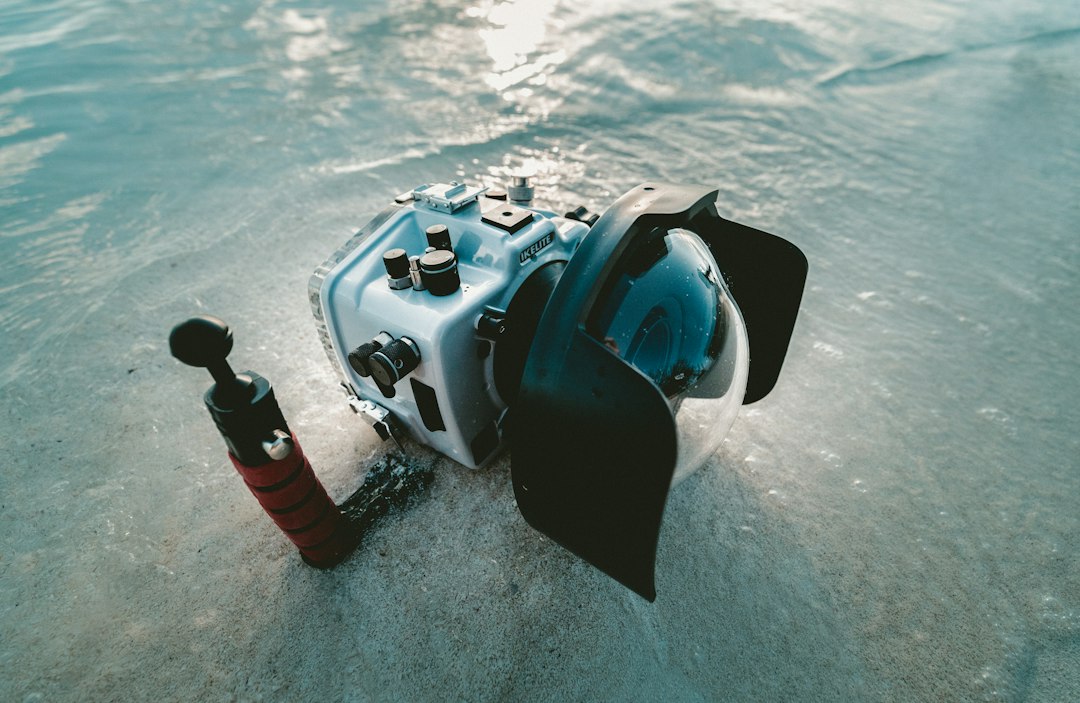
BBC Studios has introduced a calculated editorial shift for its flagship natural history documentary Blue Planet III, deliberately retaining unpolished footage—such as murky water, floating particulate matter, and accidental background artifacts—to signal genuine physical origin to viewers. This strategy highlights a growing inversion in digital production: as generative video platforms produce increasingly immaculate sequences, flawless rendering is becoming a marker of synthetic generation rather than cinematic excellence. By elevating visual imperfections into authentic trust signals, the production establishes a new benchmark for empirical media in an age dominated by artificial generation.
The Paradox of Synthetic Perfection in Digital Media
For decades, premium wildlife broadcasting competed on absolute visual clarity. Production units spent millions of dollars on specialized underwater housing, high-frame-rate sensors, and extensive post-production cleanup to strip out atmospheric noise, sediment, and lens occlusions. The objective was to present nature in a state of hyper-definition that exceeded what the human eye could capture unassisted.
However, the rapid maturation of generative AI video engines—such as OpenAI's Sora and Runway's Gen-3—has completely altered the perceptual value of visual perfection. Text-to-video models inherently default to optimized rendering algorithms. Unless explicitly instructed to generate physical camera flaws or visual noise, machine learning architectures generate smooth lighting transitions, perfectly framed subjects, and pristine background environments.
Because diffusion models excel at producing pristine aesthetics, visual purity no longer guarantees high-budget field production. Instead, absolute clarity invites viewer skepticism. The primary risk for broadcasters is no longer that footage looks visually underwhelming, but that exceptional natural footage will be misidentified as an algorithmic output. The strategic emphasis on Blue Planet III AI authenticity highlights how media houses must now engineer visual trust alongside narrative quality.
Imperfection as an Organic Proof-of-Work
To counter synthetic skepticism, field cinematographers and editors are leaning into organic visual noise as a form of non-cryptographic proof. In the context of deep ocean filmmaking, this involves retaining elements that traditional broadcast standards previously discarded:
- Suspended Organic Matter: Leaving natural marine drift and plankton clusters visible in front of lenses, which require complex volumetric light scattering that generative video often struggles to render consistently.
- Uncontrolled Environmental Light: Retaining fluctuating water visibility and ambient light refraction that disrupt uniform pixel rendering.
- Unplanned Human Artifacts: Allowing distant maritime vessels or navigation buoys to remain in frame, establishing concrete, non-idealized geographical context.
- Complex Multi-Agent Physical Interactions: Capturing chaotic wildlife behaviors, such as cetaceans deploying marine sponges as foraging tools or massive crustacean aggregations, where multi-body physics create chaotic collision dynamics.
These physical micro-behaviors act as an organic proof-of-work. While generative models can simulate a generic dolphin or a solitary fish with high fidelity, simulating the multi-layered fluid dynamics of hundreds of thousands of organisms interacting in unstable lighting conditions presents severe computational and continuity challenges for current generative pipelines. The presence of visual chaos serves as evidence that human camera operators were physically present on location.
The Limits of Synthetic Simulation
Generative video models synthesize scenes based on statistical probabilities derived from training datasets. Consequently, they tend to output homogenized representations of animal behavior. Rare, highly specific ecological interactions—such as cross-species communication patterns observed in deep-water environments—remain underrepresented in training corpuses. Documenting these specific occurrences on raw camera sensors provides a level of empirical domain authority that synthetic tools cannot independently originate.
Beyond Aesthetics: Cryptographic Provenance vs Visual Cues
While aesthetic choices like retaining camera sediment offer immediate visual feedback to casual viewers, the long-term protection of natural history broadcasting relies on formal technical standards. The digital media sector is currently navigating a dual-track approach to content verification:
- Perceptual Verification: In-camera flaws, long single-take tracking shots, and visible atmospheric interference that act as immediate perceptual markers for audience evaluation.
- Structural Provenance: Hardware-level cryptographic signing standardizations, such as the Coalition for Content Provenance and Authenticity (C2PA) framework, which embeds immutable metadata directly into raw video files at the sensor level.
While structural provenance provides verifiable forensic proof for technical audits and legal licensing, general audiences rarely inspect metadata manifests or verification headers when consuming broadcast television. Therefore, perceptual cues remain the front-line mechanism for establishing trust. Broadcasters must bridge the gap between back-end cryptographic authenticity and front-end visual presentation, ensuring that what viewers see aligns with what the metadata proves.
Broader Industry Implications for High-Budget Documentaries
This tactical shift by BBC Studios signals a broader re-evaluation of post-production priorities across the film and television sector. Historically, post-production budgets allocated significant resources to digital cleanup—removing lens flares, stabilizing natural camera shake, and erasing unwanted background elements. In a landscape saturated with synthetic media, aggressive post-production editing can inadvertently erase the very artifacts that prove a sequence was captured in the real world.
This operational shift alters the economic value proposition of field documentary crews. If visual perfection can be algorithmically synthesized at a fraction of the cost of deep-sea expeditions, the economic justification for high-budget wildlife filmmaking hinges entirely on non-replicable authenticity. Documentaries are transforming from pure visual entertainment into verifiable empirical records of planetary conditions.
What to Watch in the Synthetic Media Verification Era
As synthetic video generation tools become integrated into standard creative suites, the boundaries between captured and generated media will continue to blur. Industry analysts should monitor several critical indicators over the coming broadcast cycles:
- Broadband Implementation of Sensor-Level C2PA: Watch for major camera manufacturers to introduce native cryptographic signing in professional cinema hardware, linking physical sensors to tamper-evident ledgers.
- Evolution of Broadcast Disclosure Standards: Track whether regulatory bodies mandate standardized on-screen disclaimers differentiating between captured physical footage, digitally enhanced sequences, and fully synthetic B-roll.
- Audience Literacy and Anti-Spoofing Trends: Observe how viewer sentiment evolves as consumer familiarity with AI video artifacts deepens, potentially forcing synthetic software developers to program artificial flaws back into AI pipelines to mimic real-world capture.
Reporting reference: this briefing is TechWire’s independent analysis. Primary reporting was published by The Verge — read the source article.
Related analysis
x86 Processor Evolution: How Legacy Trade-Offs Won
Explore the x86 processor evolution, from 1970s hardware choices to modern computing compatibility, explaining little-endianness and register design.

NSF Leadership Nomination Collapses Amid Science Policy Crisis
Senate pushback on the NSF leadership nomination highlights growing friction over federal science funding and academic research oversight.

TRMNL Frame: Full Color ePaper Display Canvas Debuts
An analysis of TRMNL Frame, a 31.5-inch full color ePaper display using Spectra 6 tech, custom color engines, and in-house manufacturing.