apple homeview security camera
Apple HomeView Security Camera Upgrade Hinted in Firmware Code
Uncovered code reveals Apple HomeView security camera integration via HomeKit Secure Video. Read our analysis of Apple's smart home privacy strategy.
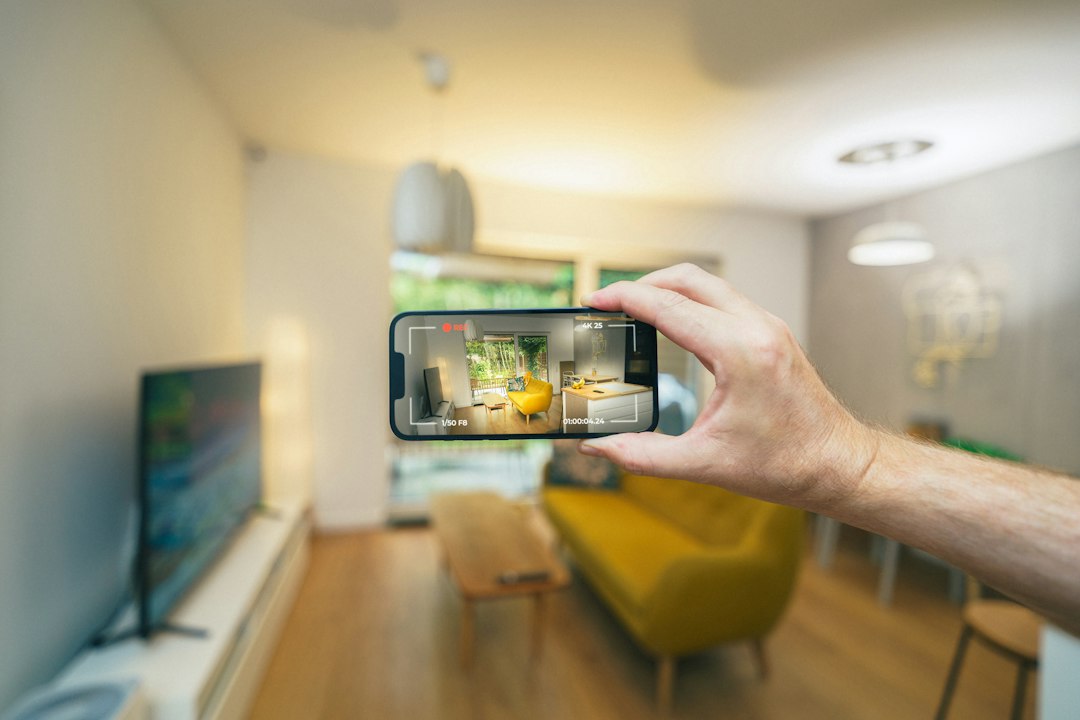
Recent evidence hidden within software updates points to a significant functional expansion for Apple's smart home ecosystem. Code assets discovered in the HomeView 27.2 software build indicate that the technology company is preparing to activate features allowing the device to operate as a local security node. By leveraging the existing HomeKit Secure Video architecture, this upcoming capability aims to bridge the gap between dedicated security hardware and tabletop ambient displays while maintaining strict end-to-end privacy controls.
Decoding the HomeView Firmware Indications
Details uncovered from software references suggest that the setup workflow for the Apple HomeView security camera functionality is already structured within current operational builds. The configuration interface explicitly mentions converting the stationary unit into an active video feed tied directly into secure media streaming pipelines.
Rather than relying purely on continuous recording, the code outlines granular automation parameters. Users will reportedly be able to define operating profiles based on household presence—adjusting monitoring behavior depending on whether occupants are at home, away, or sleeping. Functionally, this mirrors presence-detection features found in high-end dedicated surveillance gear, enabling automated state switches without requiring constant manual intervention.
Key capabilities specified within the underlying configuration include:
- Adaptive state triggers tied to user location, automatically toggling recording modes during away or sleep states.
- Customizable event triggers that distinguish generic movement from targeted alert events.
- Multi-user administrative notifications whenever primary privacy settings or monitoring profiles are altered.
- Integrated multi-device streaming, allowing authorized household members to view live feeds directly across compatible personal devices.
Hardware Privacy Architecture and Visual Signaling
Smart displays placed in private living spaces present inherent privacy concerns. To mitigate user discomfort, the code reveals strict physical and auditory notification requirements embedded within the firmware. Whenever an active stream is engaged or video capture commences, the device will illuminate a visible indicator light and play an audible chime.
This hardware-level and software-coordinated alert mechanism ensures that room occupants are immediately aware of active monitoring. Unlike third-party smart cameras that operate silently in the background, the proposed implementation emphasizes immediate spatial transparency. Furthermore, access to live streams is tightly restricted to designated members of the home group configured within the local system, preventing broad network exposure.
Underlying this operational workflow is HomeKit Secure Video, a framework designed specifically to handle sensitive video data without broad cloud access. Under this architecture:
- Video frames are analyzed locally on a designated home hub using computer vision models to detect people, pets, or package movements.
- Streamed footage is encrypted end-to-end before transmitting across remote server infrastructure.
- Cloud storage operations are integrated into existing privacy tiers without exposing unencrypted video feeds to third parties.
Ecosystem Strategy: Maximizing Hardware Utility
The choice to delay active camera recording features until post-launch software updates reflects a familiar pattern in smart device lifecycle management. By establishing the hardware foundation first and enabling advanced sensor features via incremental software updates, engineering teams gain additional time to refine edge-processing algorithms and verify operational security.
Converting an ambient Apple smart display into an active monitoring node substantially increases the device's overall value proposition without adding incremental manufacturing costs. Competitors in the smart display market, notably Amazon's Echo Show series and Google's Nest Hub lineup, have offered built-in camera monitoring for several product generations. However, consumer adoption has occasionally faced friction due to concerns surrounding cloud processing and data telemetry.
By framing the Apple HomeView security camera upgrade around local machine learning and cryptographic privacy, the company targets privacy-conscious consumers who previously hesitated to place camera-equipped hardware in central living spaces or bedrooms.
Physical Deployment Challenges and Sensor Calibration
While software capabilities expand the scope of what the device can achieve, physical constraints inherently differentiate a tabletop ambient display from dedicated security hardware. Standard surveillance cameras benefit from elevated mounting positions, wide-angle lenses, and adjustable mounting hardware optimized for broad coverage.
In contrast, a tabletop smart display is typically positioned on kitchen counters, side tables, or desks, facing inward toward specific sitting areas. This introduces distinct engineering challenges:
- Field of View (FOV Limits): Tabletop placement limits vertical viewing angles, potentially leaving upper room areas unmonitored.
- Environmental Occlusion: Low-level positioning subjects the lens to desk clutter, dynamic backlighting, and variable room illumination.
- Interaction Interference: Household members interacting directly with the touch display will temporarily obscure optical sensors during normal usage.
To offset these structural limitations, the system's software layer likely relies on digital field-of-view correction, dynamic range adjustment, and localized image tuning optimized for near-field indoor illumination.
What to Watch: Rollout Signals and Software Integration
As ambient computing platforms continue to evolve, activating underutilized hardware capabilities remains a key driver for software ecosystem retention. The integration of HomeKit Secure Video into multi-purpose tabletop hardware highlights a shift toward unifying home automation, personal communication, and physical security under a unified software umbrella.
Moving forward, key indicators of this feature's official release will include:
- Developer beta updates containing public API hooks for third-party smart home trigger routines.
- Formal announcements during major operating system software keynotes or smart home hardware refreshes.
- Updated regulatory documentation detailing local processing standards for smart home video peripherals.
Should these firmware references transition into a live consumer feature, the update will effectively turn stationary indoor hardware into a versatile surveillance hub, establishing a privacy-focused reference design for ambient home infrastructure.
Reporting reference: this briefing is TechWire’s independent analysis. Primary reporting was published by The Verge — read the source article.
Related analysis
x86 Processor Evolution: How Legacy Trade-Offs Won
Explore the x86 processor evolution, from 1970s hardware choices to modern computing compatibility, explaining little-endianness and register design.

NSF Leadership Nomination Collapses Amid Science Policy Crisis
Senate pushback on the NSF leadership nomination highlights growing friction over federal science funding and academic research oversight.

TRMNL Frame: Full Color ePaper Display Canvas Debuts
An analysis of TRMNL Frame, a 31.5-inch full color ePaper display using Spectra 6 tech, custom color engines, and in-house manufacturing.